How to Navigate European Metro Systems: Your Complete City-by-City Public Transport Guide
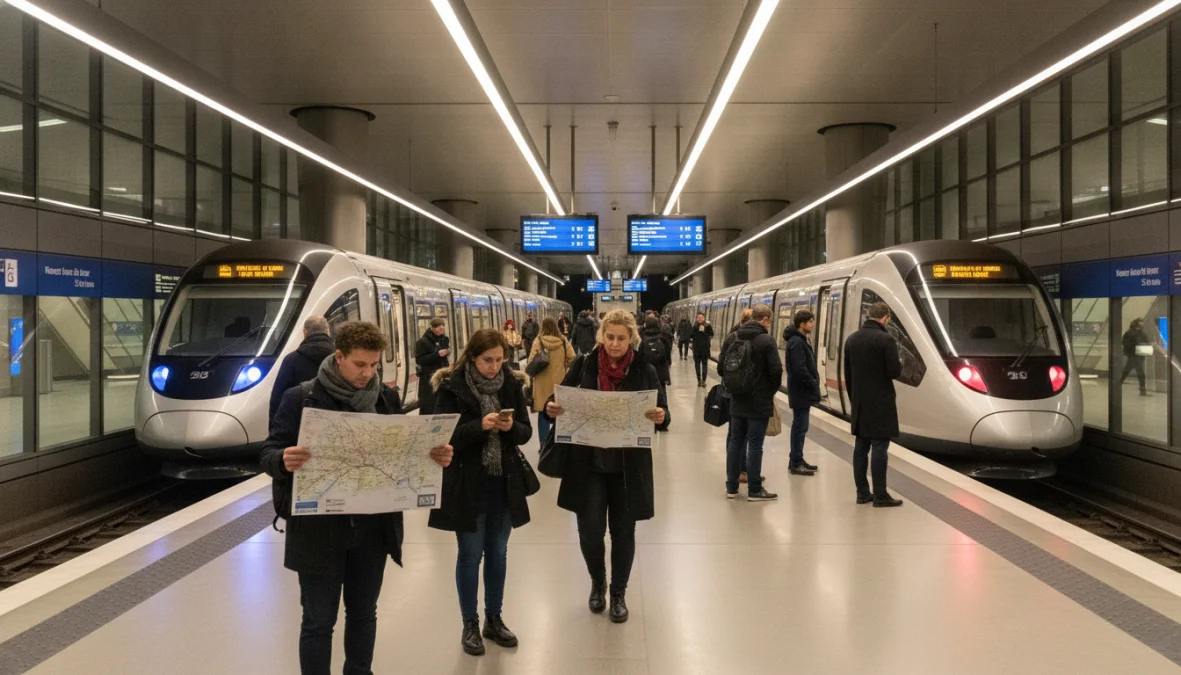
Picture this: you’re standing in front of a sleek metro entrance in Paris, Barcelona, or Berlin, clutching a crumpled map and wondering whether that ticket machine actually accepts your credit card. Sound familiar? Navigating European metro systems doesn’t have to feel like solving a Rubik’s cube blindfolded. With over 60 metro networks crisscrossing the continent, understanding the basics of european metro guide essentials can transform your city-hopping adventures from stressful to seamless. Whether you’re planning a quick weekend getaway or an extended European tour, mastering public transport is your ticket to authentic urban exploration without breaking the bank.
Understanding European Metro Systems: What Makes Them Different
European transit systems operate on principles that might surprise first-time visitors, especially those coming from North America or Asia. The defining characteristic of metro systems europe is their integration: most cities offer unified ticketing that covers buses, trams, and underground railways under one payment system. Unlike many American cities where each mode requires separate fares, a single ticket in Munich or Vienna grants access to the entire public transport network.
The concept of fare zones is fundamental to european transit systems. Cities like London and Berlin divide their metro networks into concentric zones, with pricing based on distance traveled. Central zones are typically more expensive, while outer zones offer cheaper rates. This contrasts sharply with flat-fare systems common in Asian metros. Understanding your journey’s zone requirements prevents awkward encounters with ticket inspectors—yes, they’re a real thing, and yes, they check regularly.
Cultural differences matter too. In Germany and Austria, ticket validation relies heavily on the honor system: you purchase tickets but must validate them in yellow or blue machines before boarding. Forget this step, and you’re liable for hefty fines, even with a valid ticket. Southern European countries like Italy and Spain enforce stricter validation checks at station entrances, similar to turnstile-based systems. These quirks make researching your specific destination crucial before you arrive.
City-by-City Metro Navigation Guide
The beauty of city metro navigation across Europe lies in each system’s unique personality. While general principles apply, every metro network has its own rhythm, pricing structure, and unwritten rules. This european subway guide breaks down the continent’s major systems into manageable chunks, giving you the confidence to navigate like a local from day one.
Western Europe’s Major Metro Hubs
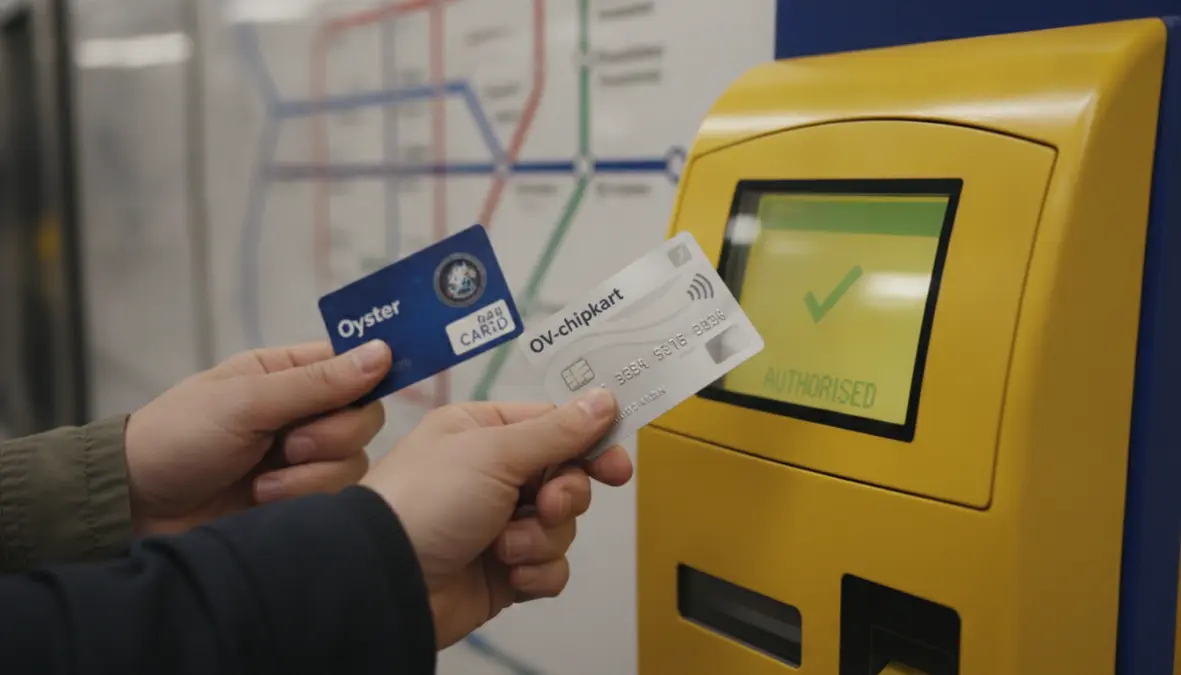
London’s Underground remains Europe’s most extensive metro system with 11 lines covering 272 stations. The iconic Tube operates on a nine-zone system, though most tourists stick to Zones 1-2. Your best bet? An Oyster Card or contactless payment directly with your credit card—both offer the same daily price capping that prevents overspending. Download the official TfL Go app for real-time disruption updates and journey planning. Pro tip: avoid traveling during peak hours (7:30-9:30 AM and 5-7 PM) when fares nearly double. The cheapest way to use metro in Europe’s priciest city involves understanding these caps: once you’ve spent the equivalent of a day pass, all additional journeys are free.
Paris Metro presents its own challenges with 16 metro lines plus the RER suburban railway system. The difference matters: the Metro serves central Paris with frequent stops, while the RER connects outer suburbs and major landmarks like Versailles and Charles de Gaulle Airport. Single tickets (t+ tickets) work for both but validate separately. For extended stays, the Navigo Découverte card offers unlimited weekly travel for €22.80 plus zones. Download Citymapper or RATP’s official app for navigating the world’s second-busiest metro. Watch for frequent strikes (especially Thursdays) and keep belongings secure—Paris metro stations are notorious pickpocket hotspots.
Amsterdam’s system operates differently: its relatively small metro network (four lines) supplements an extensive tram system. The OV-chipkaart works across all Dutch public transport—purchase a disposable one for short visits or a personal card for €7.50 if staying longer. Always check in AND out by tapping yellow card readers; forgetting either step results in maximum fare charges. Amsterdam’s metro runs until midnight weekdays, 1 AM weekends, with night buses filling gaps. If you’re also exploring other Dutch cities, this integrated system proves invaluable.
Brussels operates a compact four-line metro complemented by pre-metro trams. The MOBIB card functions similarly to Amsterdam’s system, but paper tickets remain widely available. Brussels’ bilingual signage (French/Dutch) can confuse newcomers—station names sometimes differ between languages. Operating hours run 5:30 AM to midnight, with weekend extensions to 1 AM. Combine your metro exploration with Brussels’ fantastic shopping districts accessible via the central stations.
Southern and Eastern European Transport Networks
Rome’s Metro is surprisingly limited for such a major city—just three lines (A, B, and C) due to constant archaeological discoveries during construction. Most ancient sites cluster in the centro storico, which lacks metro coverage; you’ll walk or bus between attractions. Single tickets cost €1.50 and validate for 100 minutes across all transport. Purchase from tobacco shops (tabacchi) when machines malfunction—which happens frequently. Rome’s metro runs 5:30 AM to 11:30 PM (12:30 AM weekends), making late-night planning essential. Validation is mandatory; inspectors patrol aggressively, especially on tourist-heavy Line A.
Madrid boasts one of Europe’s cleanest, most efficient systems: 12 color-coded lines covering 294 kilometers. The zone-based pricing starts at €1.50-€2 for central journeys. Multi-day tourist passes offer unlimited travel plus discounts at museums—perfect for intensive sightseeing. Download the official Metro Madrid app for offline metro map europe access and real-time train schedules. Madrid’s metro runs 6 AM to 1:30 AM, genuinely making it useful for nightlife. The system’s modernity and English signage make it perhaps the easiest for beginners learning how to use metro in european cities.
Barcelona’s TMB network features eight metro lines plus the separate FGC suburban trains. The T-Casual card (10 journeys for €11.35) offers the best value for short stays, usable by multiple people. Barcelona’s integrated zones extend to beach towns and Montserrat monastery. Operating hours match Madrid’s, but Sunday schedules reduce frequency. The metro connects seamlessly with destinations covered in our one-day city guides—apply the same efficient planning approach.
Berlin’s U-Bahn and S-Bahn together create Germany’s most comprehensive urban rail network. The U-Bahn (underground) focuses on city center, while S-Bahn (suburban) reaches airports and outer districts. Berlin operates on three fare zones (A, B, C) with most tourist sites in AB. Single tickets cost €3, but day passes (€8.80) quickly pay off. Berlin’s honor system means no turnstiles—purchase tickets from machines, validate in yellow boxes, and board freely. Weekend trains run 24 hours, embodying Berlin’s legendary nightlife culture. Download the BVG app for the definitive beginner guide to european metro systems functionality.
Vienna’s U-Bahn operates five lines (U1-U6, skipping U5 until completion) with legendary punctuality and cleanliness. Single tickets cost €2.40, but 24-hour passes (€8) or weekly cards (€17.10) suit most visitors. Vienna’s single-zone simplicity removes London-style calculation headaches. Validate tickets once; they’re valid for one journey with unlimited transfers. The metro runs 5 AM to midnight weekdays, 24 hours weekends—combine with rail passes for exploring nearby Austrian destinations.
Essential Tips for Using Any European Metro System
Regardless of which european public transport guide you consult, certain universal principles apply across the continent. Master these fundamentals, and you’ll navigate any system with confidence, even when platform signage appears exclusively in Cyrillic or Greek.
App essentials top the list of public transport tips europe veterans swear by. Citymapper covers major cities with real-time updates, offline maps, and multi-modal journey planning. Google Maps now integrates live metro data for most European networks. Download city-specific apps before departure: they often include ticket purchasing, saving precious time at confusing machines. If you’re concerned about data costs, check our guide on navigating European cities without data roaming for offline solutions.
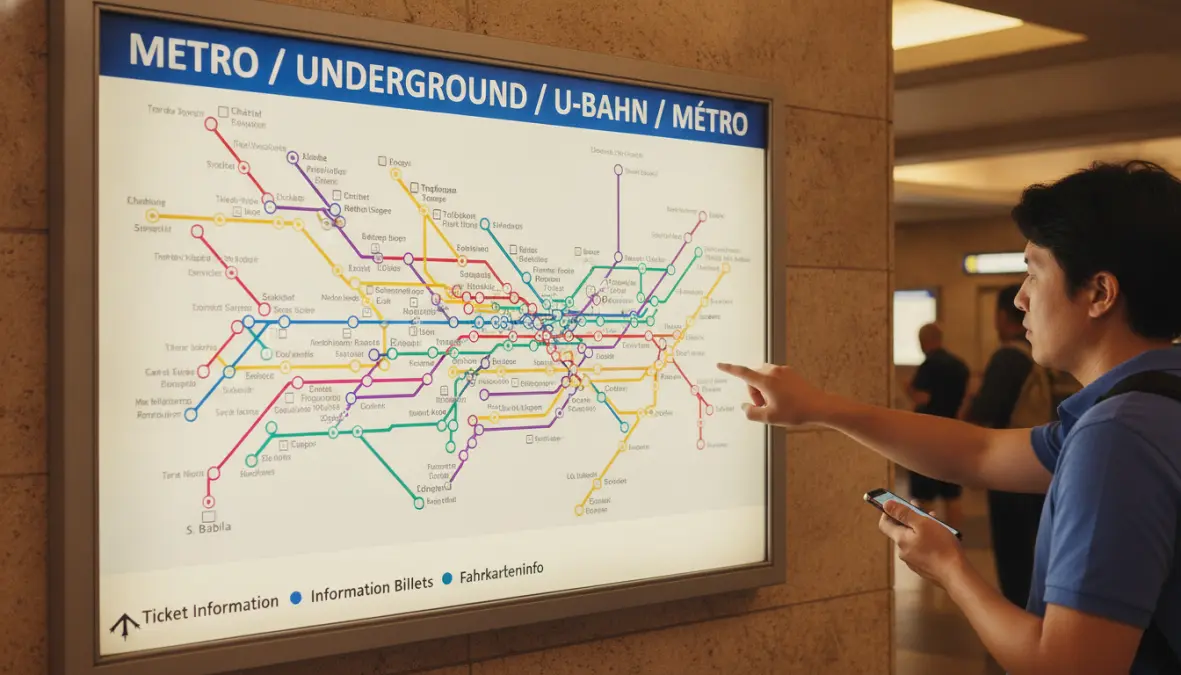
Decoding metro maps requires understanding European cartographic conventions. Lines appear as colored threads, with transfer stations marked by interchange symbols (usually circles or squares where lines intersect). Terminus stations indicate direction—trains display final destinations, not compass directions. The maps aren’t geographically accurate; they’re schematic diagrams prioritizing clarity over scale. This explains why “nearby” stations sometimes require lengthy walks above ground.
Payment methods increasingly embrace contactless payment, especially in London, Madrid, and Barcelona where credit cards work exactly like transit cards. However, smaller cities still require cash for ticket machines. Always carry €5-10 in coins; many machines reject bills or cards inconsistently. Tourist passes deserve calculation: they’re worthwhile for intensive 2-3 day visits but rarely beat pay-per-ride for casual use. The cheapest way to use metro in europe usually involves day passes once you’re taking 3+ journeys daily.
Safety and etiquette vary by city but follow general patterns. European metros are generally safe, though pickpockets target tourist-heavy lines and stations. Keep bags zipped and phones pocketed near doors and in crowded cars. Late-night travel warrants extra caution in certain cities—Paris and Rome particularly—but remains reasonably safe compared to other global metros. Stand right on escalators, allowing rushing commuters to pass left. Offer seats to elderly and pregnant passengers. Keep voices moderate; loud conversations mark you as a tourist and potential target.
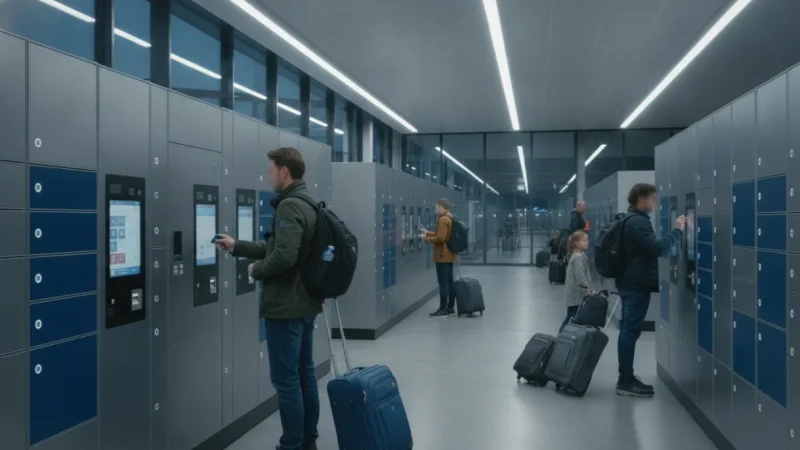
Luggage logistics present challenges in older systems lacking elevators. Paris and London feature countless stair-only stations; research accessibility before hauling suitcases. Most metros allow luggage free, though crowded rush hours make this impractical. If you’re doing a quick city break, consider luggage storage at stations rather than dragging bags underground all day.
FAQ: Common Questions About European Metro Travel
Do I need to validate my metro ticket in Europe?
It depends on the city. German-speaking countries (Germany, Austria, Switzerland) require validation in machines before boarding, even with valid tickets. Italy and Spain validate at turnstiles or station entrances. London, Paris, and most Western European cities validate automatically when you tap in. Always research your specific destination—ignorance doesn’t excuse fines ranging from €40-60.
Which European city has the best metro system?
Madrid and Vienna consistently rank highest for cleanliness, frequency, and coverage. Madrid’s extensive network and late hours suit tourists perfectly, while Vienna’s simplicity and reliability exemplify Germanic efficiency. Munich and Copenhagen also score excellently. Rome and Athens rank lowest due to limited coverage and maintenance issues, though they’re improving.
Can I use contactless payment on European metros?
Increasingly yes, but it’s not universal. London’s entire network accepts contactless cards and mobile payments with automatic daily capping. Madrid, Barcelona, and Prague offer contactless options. Paris is gradually rolling out contactless for tourists. However, many Eastern European cities, smaller metros, and ticket machines still require cash or specific transit cards. Always have a backup payment method.
Are European metro systems safe at night?
Generally yes, with caveats. Nordic and Germanic metros (Copenhagen, Stockholm, Berlin, Vienna) feel very safe at all hours. Paris and Rome require more vigilance after 10 PM, particularly on tourist lines. Barcelona’s metro is safe but attracts pickpockets even late. Most cities reduce service frequency after midnight, with some shutting down entirely—plan accordingly. Solo travelers should research specific line reputations before late-night journeys.
What’s the difference between metro, subway, and underground in Europe?
They’re synonymous—different terms for the same concept. “Underground” or “Tube” is British (London). “Metro” is used in Paris, Madrid, and most Romance language cities. “U-Bahn” (underground railway) is German. “Subway” rarely appears in Europe, being primarily American terminology. All refer to electric rail systems operating primarily in tunnels with frequent stops serving urban areas, distinct from suburban railways or trams.
Mastering European metro systems transforms your travel experience from surface-level tourism to genuine urban immersion. Each network’s quirks reflect its city’s character—London’s organized chaos, Paris’s elegant complexity, Berlin’s no-nonsense efficiency. With this european metro guide in your back pocket, you’re ready to navigate any system confidently, whether you’re hopping between cities on budget airlines or spending weeks exploring a single destination. The underground awaits—grab your transit card and dive in.