One Day in Venice: Canals, Gondolas, and Hidden Bacari Beyond San Marco

Venice hits differently when you’ve only got 24 hours. There’s no time for wandering aimlessly or getting stuck in tourist traps that drain your wallet and your enthusiasm. Spending one day in Venice means making smart choices—starting early, knowing when to skip the lines, and discovering the authentic corners where locals actually hang out. This isn’t about rushing through a checklist; it’s about experiencing the soul of Venice beyond the postcard clichés, from misty morning canals to evening aperitivo in hidden neighborhood bars.
Morning: Beyond San Marco’s Iconic Landmarks
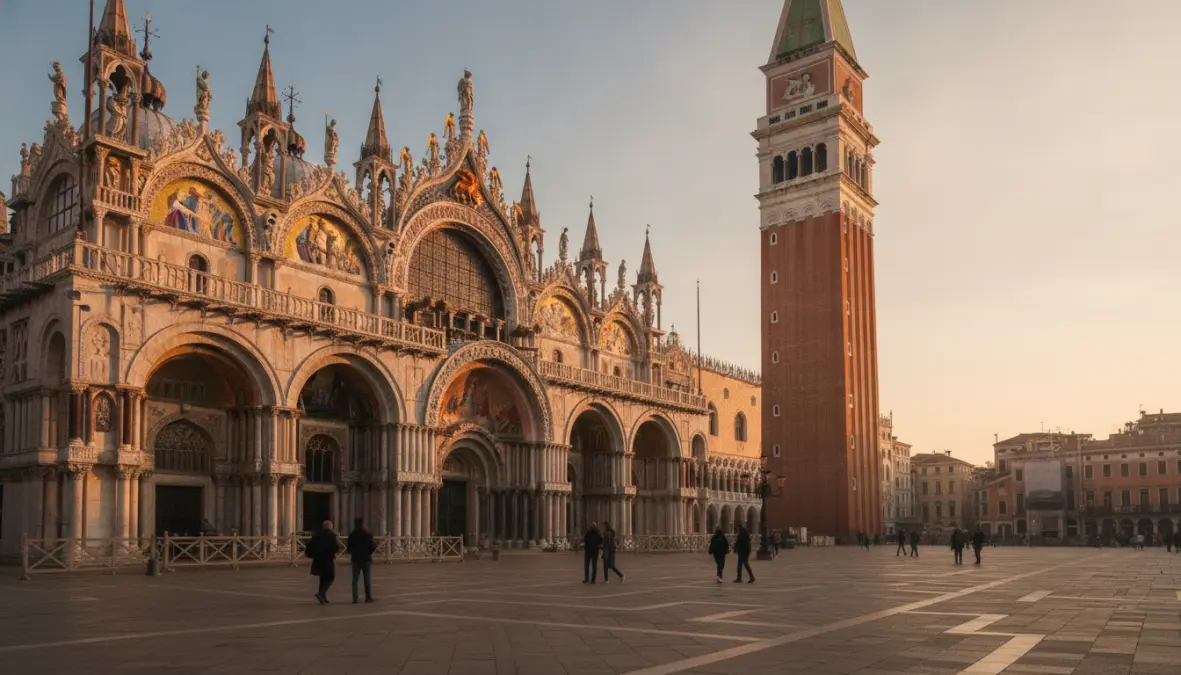
If you want to make the most of one day in Venice, arrival matters. Get to the city by 8 AM if possible—early trains from mainland Mestre are cheap and frequent. Head straight to Piazza San Marco while the morning light paints the mosaics of the Basilica and before the cruise ship crowds descend around 10 AM.
St. Mark’s Basilica opens at 9:30 AM on most days, and arriving right at opening gives you precious time to appreciate the Byzantine splendor without being herded like cattle. Skip-the-line tickets for the Basilica terrace are worth every euro—the views over the piazza and lagoon are spectacular. Next door, Palazzo Ducale (Doge’s Palace) deserves at least an hour. Book your ticket online to avoid the queue, and don’t miss the secret itineraries tour if you’re into hidden passageways and prison cells.
The Ponte dei Sospiri (Bridge of Sighs) connects the palace to the old prisons—you’ll see it from inside during your Palazzo Ducale visit, which gives you a far better perspective than the crowds photographing it from the outside bridge. By 11 AM, you’ve conquered San Marco’s essentials and it’s time to escape toward Venice’s authentic neighborhoods. Similar to planning one day in Rome, strategic timing around major landmarks transforms your experience entirely.
Afternoon: Canals, Gondolas, and Venice’s Hidden Neighborhoods
Navigating the Canals: Gondola vs Traghetto Experience
Here’s the truth about gondolas: they’re expensive (€80-€100 for 30-40 minutes during the day, more in the evening) but undeniably magical. If you’re doing it, book directly at official gondola stations near smaller canals like those around Campo San Polo or near the Rialto Market—you’ll get quieter waterways than the Grand Canal circus.
The budget alternative? Traghetti—these are €2 gondola ferries that shuttle locals across the Grand Canal at seven crossing points. Sure, you stand rather than sit, and the ride lasts two minutes instead of forty, but you’re in an actual gondola, steered by actual gondoliers, experiencing actual Venetian transport. The traghetto near Ca’ Rezzonico offers particularly photogenic canal views. For navigating Venice without draining your phone battery, check out essential offline travel apps that work throughout Europe.
Exploring Dorsoduro and Cannaregio’s Authentic Streets
After your canal experience, head to Dorsoduro. This neighborhood feels like a different Venice—university students, neighborhood cafés, and laundry hanging between buildings. The Gallerie dell’Accademia houses Venice’s greatest art collection (Titian, Tintoretto, Veronese), but even if museums aren’t your thing, wandering to Campo Santa Margherita reveals the Venice where people actually live. Grab a sandwich from a local bakery and watch kids play football in the square.
Cross back toward Cannaregio in the late afternoon. The Jewish Ghetto—the world’s first, dating from 1516—offers profound history and excellent kosher bakeries. The tall buildings here tell stories of a community forced to build upward when expansion outward was forbidden. These authentic neighborhoods provide the same kind of off-the-beaten-path satisfaction you’d find exploring hidden coastal towns near Barcelona—real life, not performance.
Evening: Discovering Venice’s Hidden Bacari Culture
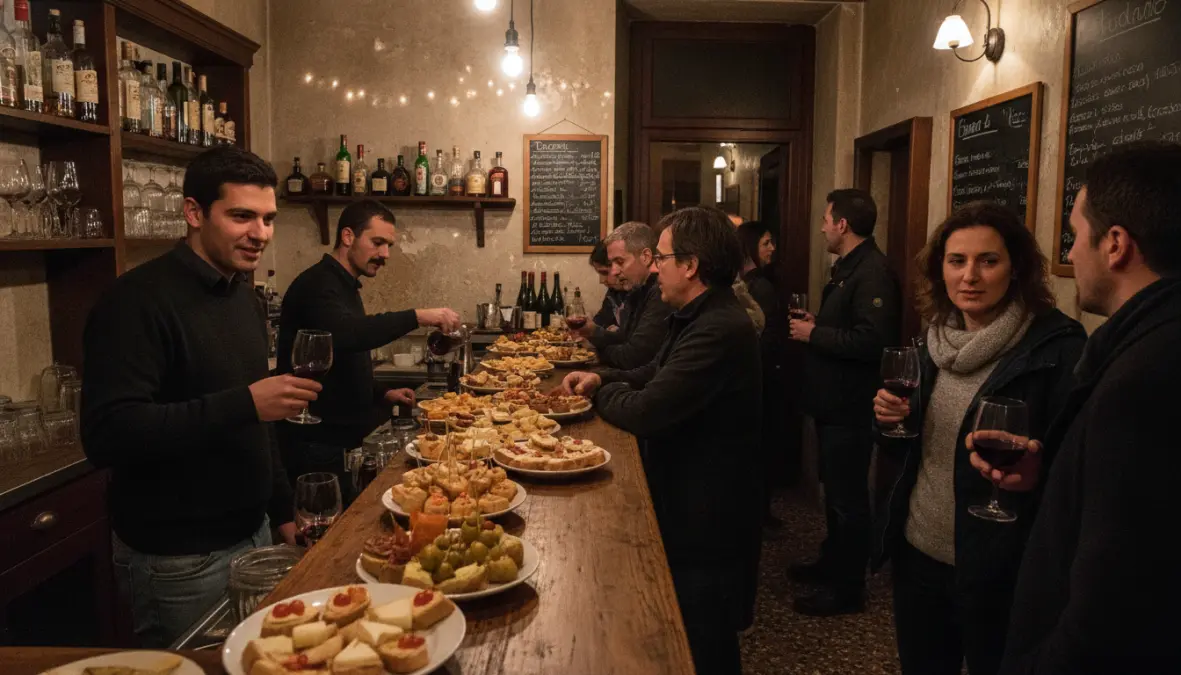
This is where your one day in Venice transforms from good to unforgettable. Forget fancy restaurants with €20 pastas and English menus outside. Venice’s true evening tradition is bacaro hopping—moving between tiny neighborhood bars called bacari, standing at the bar with locals, drinking small glasses of wine (ombra), and snacking on cicchetti (Venetian tapas).
Hidden bacari aren’t actually hidden—they’re just where tourists don’t go because they’re hunting for table service and printed menus. Here are five authentic spots worth finding:
Cantina Do Mori (near Rialto, in San Polo) is Venice’s oldest bacaro, operating since 1462. It’s dark, tiny, and serves phenomenal crostini and polpette (meatballs). Arrive around 6 PM when locals gather for their pre-dinner ritual.
Al Timon (Cannaregio) sits along a picturesque canal where you can grab your cicchetti and wine and sit outside on the fondamenta. Their sarde in saor (sweet and sour sardines) represents quintessential Venetian flavor—don’t skip it.
Osteria Al Squero (Dorsoduro) faces a traditional gondola repair workshop. Stand outside with your spritz and watch craftsmen work on these iconic boats while you snack on bacalà mantecato (creamed cod) on crostini.
Cantinone Gia Schiavi (also Dorsoduro) offers an incredible cicchetti selection at shockingly reasonable prices. Their tramezzini (triangular sandwiches) and fried vegetables are legendary among locals.
Osteria Alla Vedova (Cannaregio) serves the city’s best polpette, according to many Venetians. The atmosphere is authentic neighborhood tavern—checkered tablecloths, locals arguing about football, zero pretension.
Bacaro etiquette is simple: order at the bar, pay immediately, consume standing or at small tables if available. Budget €15-20 for a satisfying evening of hopping between 2-3 places. Most bacari close by 9 or 10 PM, so start your crawl around 6 PM. This casual, authentic approach to dining captures the Venetian spirit far better than any formal restaurant—much like the local experiences you’d seek when planning one day in Amsterdam.
FAQ: Planning Your One Day in Venice
Is one day enough for Venice?
One day gives you a solid taste of Venice’s highlights and authentic neighborhoods. You’ll see San Marco’s landmarks, explore quieter districts, experience the canals, and discover local bacari culture. It’s not enough to see everything, but it’s absolutely enough to fall in love with the city and understand its unique character.
How much does a gondola ride cost?
Official gondola rates are €80 for 40 minutes during the day (before 7 PM) and €100 in the evening. This is per gondola (holding up to 6 people), not per person. Traghetti gondola ferries cost just €2 if you want the experience without the expense.
What time should I arrive in Venice?
Aim for 8 AM to beat the crowds at San Marco. Early morning light is beautiful, popular sites are less crowded, and you’ll maximize your limited time. Late arrivals (after 10 AM) mean fighting cruise ship crowds at major landmarks.
Where can I find authentic bacari?
Look in Cannaregio, Dorsoduro, and Castello neighborhoods rather than around San Marco or touristy Rialto areas. Authentic bacari have Italian-only menus or no written menu at all, locals standing at the bar, and cicchetti displayed on the counter.
Venice in a day isn’t about seeing everything—it’s about experiencing the city’s rhythm. Start with the icons before the crowds arrive, escape to authentic neighborhoods by midday, and end your evening standing elbow-to-elbow with Venetians at a neighborhood bacaro. That’s when you’ll understand why this impossible city, built on water and dreams, remains utterly irreplaceable.