One Day in Oslo: Viking Ships, Fjord Views, and Modern Nordic Design
Oslo might not be the first Scandinavian capital that springs to mind, but spending one day in Oslo reveals a city that masterfully blends ancient Viking heritage with cutting-edge Nordic design. Nestled between the forested hills and the shimmering Oslofjord, Norway’s capital packs impressive cultural treasures, striking modern architecture, and genuine Viking ships into a surprisingly walkable center. Whether you’re on a quick stopover or squeezing in a day trip from your cruise ship, this oslo itinerary will help you experience the best of what makes Oslo unforgettable—without the overwhelm.
Morning: Viking Heritage and Maritime History
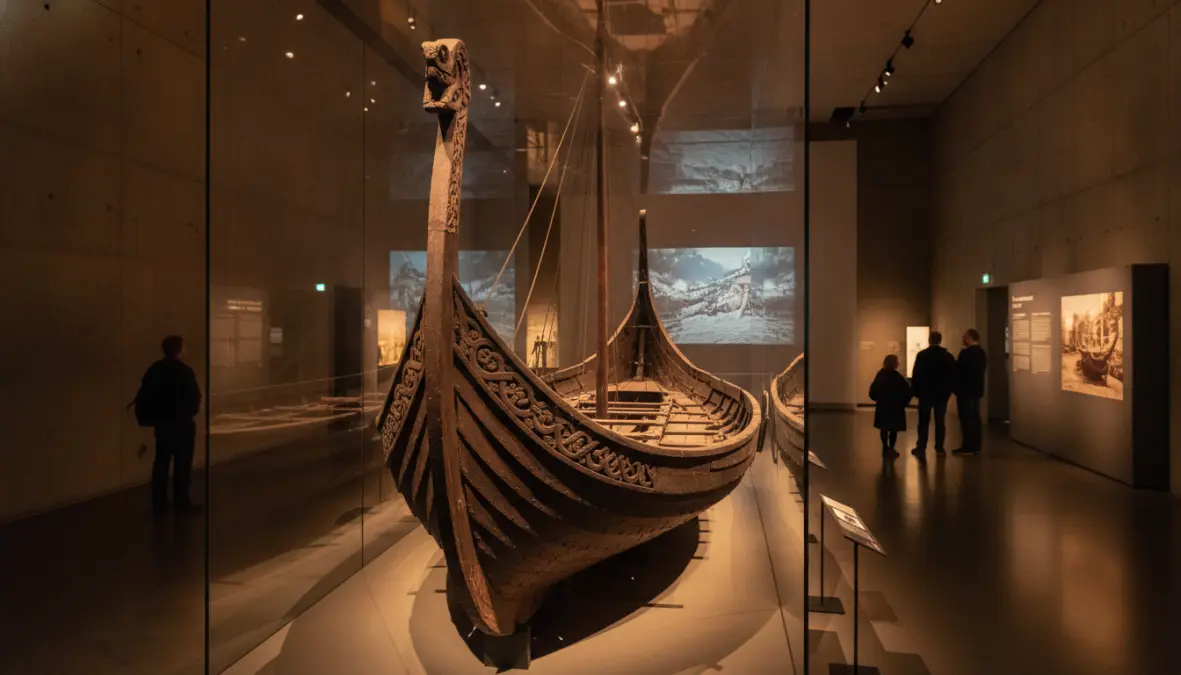
Start your oslo attractions tour early at the Bygdøy Peninsula, Oslo’s museum district that juts into the fjord about 20 minutes from the city center. This is where you’ll find some of the most remarkable things to do in Oslo, particularly for history enthusiasts. The star attraction is the Viking Ship Museum, home to three astonishingly well-preserved Viking vessels from the 9th century—the Oseberg, Gokstad, and Tune ships. These aren’t replicas; they’re actual wooden longships that carried Norse warriors and nobility over a thousand years ago, discovered in burial mounds and painstakingly restored.
Plan to visit Oslo‘s Bygdøy museums between 9-10 AM to beat the tour groups. The Viking Ship Museum typically requires 60-90 minutes to properly appreciate, but you can easily spend another hour at the nearby Norwegian Maritime Museum or the Fram Museum (which houses the polar exploration ship Fram). If you’re passionate about Nordic seafaring history, consider a combined ticket that covers multiple Bygdøy museums—it offers better value than individual entries.
Getting to Bygdøy is half the fun: from March through October, hop on ferry #91 from Aker Brygge pier (a scenic 15-minute ride with oslofjord views), or take bus #30 year-round from the city center. The ferry option adds atmosphere to your morning and lets you approach the museums from the water, just as the Vikings would have. Budget 2-3 hours total for this portion of your one day itinerary oslo norway, including travel time.
Afternoon: Oslo’s City Center and Modern Nordic Design
After your morning voyage through Viking history, return to central Oslo for an afternoon of oslo sightseeing that showcases the city’s modern identity. The compact downtown makes it easy to hit multiple highlights without exhausting yourself. Start at the Royal Palace (Slottet), where you can watch the changing of the guard at 1:30 PM, then stroll down Karl Johans Gate, Oslo’s main pedestrian boulevard lined with shops, street performers, and neoclassical buildings.
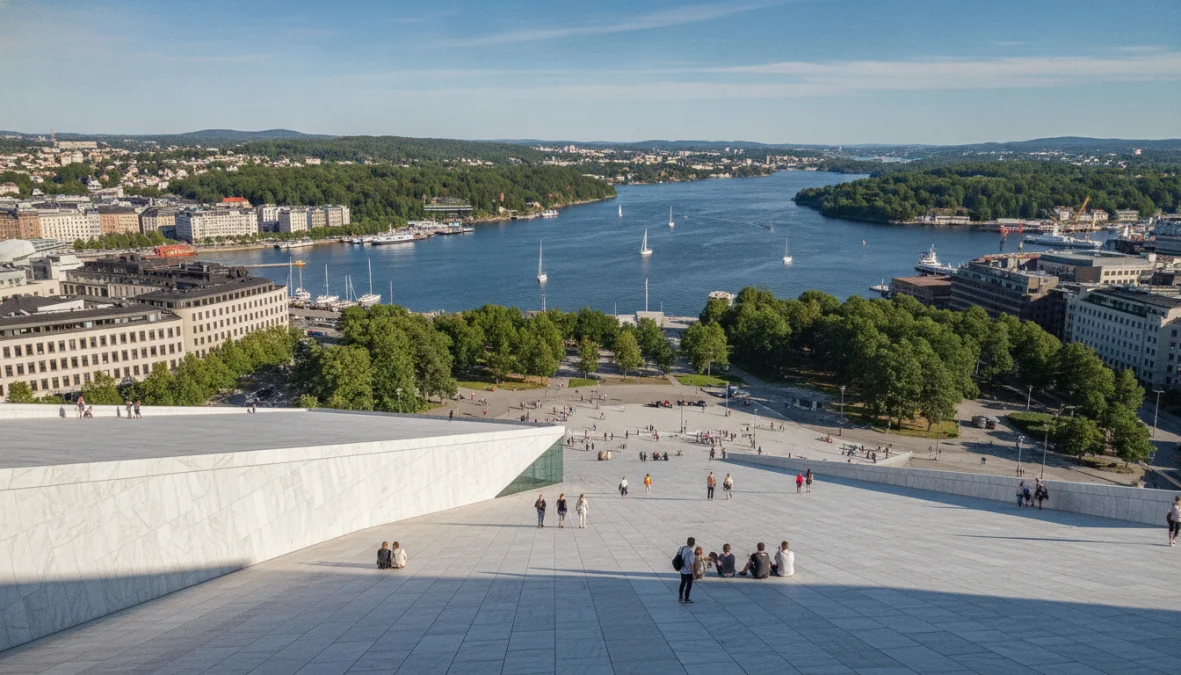
This walkable oslo itinerary continues toward the waterfront, where Oslo’s architectural renaissance truly shines. The Oslo Opera House, completed in 2008, is a masterpiece of scandinavian architecture—a white marble iceberg that invites visitors to walk up its sloping roof for panoramic city and fjord views. It’s free to access the exterior and rooftop, making it one of the best things to see in oslo in one day for budget-conscious travelers. Spend 30-40 minutes here; the tilted roof walk is genuinely exhilarating.
For art lovers wondering how to spend 24 hours in oslo, allocate time for either the National Museum (Norway’s largest art collection, including Munch’s The Scream) or the contemporary Astrup Fearnley Museum in Tjuvholmen. Both showcase exceptional Norwegian and international art, though the Astrup Fearnley’s striking Renzo Piano-designed building and waterfront location give it an edge for those prioritizing nordic design oslo museums. The National Museum is better for comprehensive art history. Choose based on your interests—you won’t have time for both on a single-day visit.
If you’re intrigued by Scandinavian design aesthetics, you might also enjoy exploring similar themes in Copenhagen’s design scene, another Nordic capital that excels at blending tradition with contemporary style.
Lunch Break: Fjord-Side Dining Experience
Around 1-2 PM, refuel at Aker Brygge or the adjacent Tjuvholmen district, Oslo’s transformed docklands now brimming with restaurants, galleries, and boardwalks. For modern Norwegian cuisine with oslofjord views, Lysverket offers inventive seafood dishes (mid-to-high price range), while Fjord Restaurant delivers traditional Norwegian flavors in a more casual setting. Budget options include Mathallen food hall (back toward the city center) with diverse vendors serving everything from reindeer hot dogs to Vietnamese bánh mì. Expect to spend 150-300 NOK for a decent lunch—Oslo isn’t cheap, but the quality and waterfront atmosphere justify the cost.
Design District: Grünerløkka or Frogner
Your afternoon choice depends on what energizes you more. Grünerløkka, Oslo’s hipster neighborhood northeast of the center, buzzes with independent design shops, vintage stores, street art, and cozy cafés perfect for a walking tour oslo one day exploration. It’s ideal if you want to shop for Scandinavian homeware, browse record stores, and soak up local creative energy.
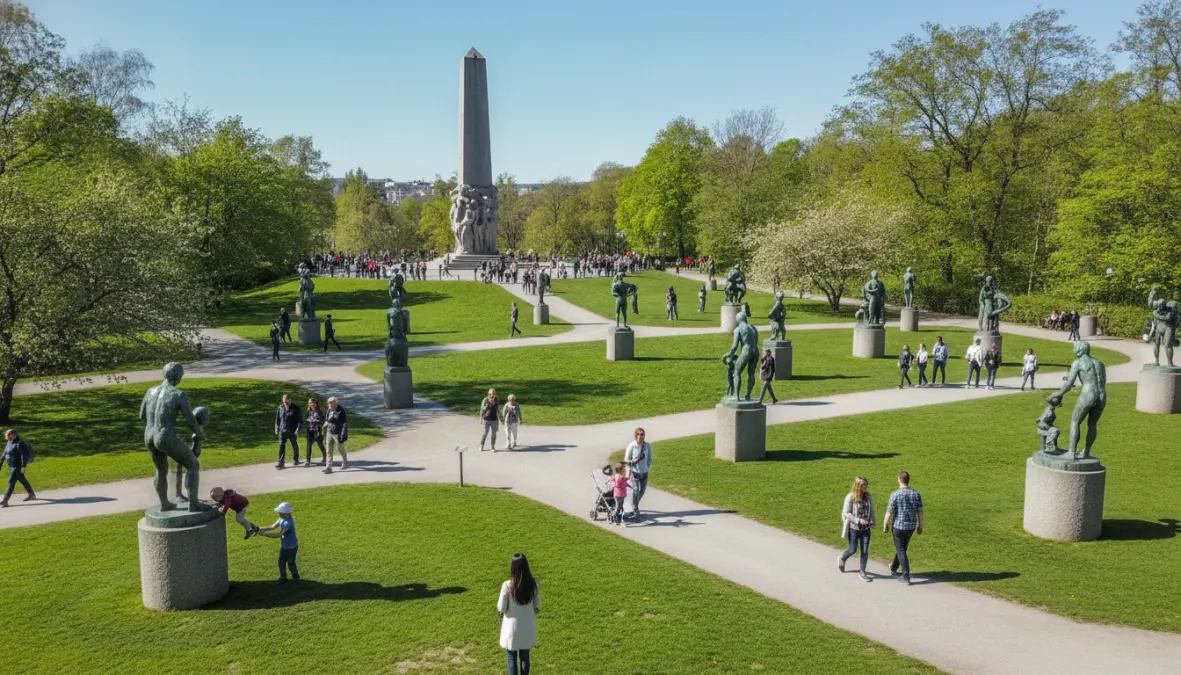
Alternatively, head to Frogner district to experience Vigeland Park (Vigelandsparken), the world’s largest sculpture park created by a single artist. Gustav Vigeland’s 200+ bronze and granite sculptures depicting the human condition fill this beautiful green space—it’s free, always open, and quintessentially Oslo. Choose Grünerløkka for urban design culture or Vigeland Park for outdoor art and relaxation; both require about 90 minutes and offer distinctly Oslo experiences.
Evening: Sunset Views and Practical Tips for Your Oslo Day Trip
As your one day in oslo winds down, cap it with sunset views that contextualize the city’s stunning natural setting. Ekeberg Park, on a hillside southeast of the center, offers the best panoramic vista of downtown Oslo, the opera house oslo, and the fjord stretching toward Sweden. It’s a 10-minute tram ride (#18 or #19) and a short walk to the viewpoint, where you’ll find additional sculptures and trails. Alternatively, return to the Opera House roof for golden-hour fjord reflections—simpler logistics and equally photogenic.
Now for the practical stuff every oslo travel guide should address: Is the Oslo Pass worth it for one day? It depends. The pass (around 445 NOK for 24 hours) includes public transport and free entry to most museums. If you’re hitting 3+ paid attractions (Viking Ship Museum, National Museum, etc.), it pays for itself. For a lighter itinerary focused on free sights like the Opera House and Vigeland Park, skip it and use the excellent Ruter app for pay-as-you-go public transport instead.
Speaking of transport, Oslo’s metro (T-bane), trams, and buses are efficient and visitor-friendly. Single tickets cost 39 NOK and are valid 60 minutes; day passes run 118 NOK. Download the Ruter app to buy tickets digitally—inspectors are common and paper tickets from machines cost more.
What should you skip if time is tight? Akershus Fortress, while historic, takes valuable time and offers less visual reward than other options. The Munch Museum (moved to a new waterfront building) is excellent but redundant if you’ve seen The Scream at the National Museum. Prioritize experiences that blend Oslo’s unique maritime heritage with its Nordic design identity.
Best time for oslo norway tourism? May through September offers the longest daylight and warmest weather (though “warm” is relative—bring layers). December’s Christmas markets add charm despite short days. Avoid late autumn (November) when it’s dark, rainy, and many attractions reduce hours.
For dinner, explore the revitalized Grønland/Tøyen area for diverse, affordable ethnic restaurants, or splurge on New Nordic cuisine at Kontrast or Maaemo (book weeks ahead). If you’re extending your stay, the Frogner or Grünerløkka neighborhoods offer charming boutique hotels within walking distance of major sights.
Architecture enthusiasts planning longer Scandinavian explorations should also check out our guide to Europe’s best architecture destinations, which features several Nordic gems beyond Oslo.
FAQ: Planning Your One Day in Oslo
Is one day enough for Oslo?
One day allows you to see Oslo’s highlights—Viking ships, the Opera House, waterfront districts, and either Vigeland Park or a major museum. You’ll get a solid taste of the city, though two days would let you explore more leisurely and add attractions like the Holmenkollen ski jump or a proper oslo fjord cruise day trip.
How to get from the airport to city center?
Oslo Airport (Gardermoen) connects to the city via the high-speed Flytoget train (20 minutes, 220 NOK) or the cheaper regional train (23 minutes, 118 NOK). Buses (Flybussen) take 40-50 minutes and cost around 200 NOK. For most visitors, the regular train offers the best value.
What’s the best way to get around Oslo?
Walking covers most central things to do in oslo, but use trams, metro, and buses for Bygdøy, Grünerløkka, and viewpoints. The public transport system is integrated and reliable. Download the Ruter app for tickets and real-time navigation.
Do I need the Oslo Pass for one day?
Calculate your planned activities. If visiting 3+ paid museums plus using public transport extensively, the 24-hour Oslo Pass (445 NOK) saves money. For an itinerary mixing free attractions with 1-2 museum entries, buying individual tickets is more economical.
What should I skip if I only have one day?
Unless you’re a military history buff, skip Akershus Fortress. The Holmenkollen ski jump, while iconic, requires significant travel time. Choose one art museum rather than attempting multiple. Focus on experiences that showcase Oslo’s unique Viking heritage and contemporary Nordic design.
When is the best time to visit Oslo?
Late spring through early autumn (May-September) offers the best weather and longest daylight for sightseeing. June brings near-midnight sun, while September has fewer tourists and beautiful autumn colors. Winter can be magical but very cold with limited daylight hours.
Oslo rewards travelers who appreciate the subtle interplay between nature, history, and design. Your single day here won’t exhaust the city’s offerings, but it will reveal why Norway’s capital has quietly become one of Scandinavia’s most compelling destinations—a place where you can admire authentic Viking longships in the morning and walk the roof of a world-class opera house by afternoon, all against the backdrop of a pristine Nordic fjord.