How to Visit Multiple Cities on One Weekend: Your 3-City Itinerary Guide
Ever felt like your weekend getaways are over before they even begin? You’re not alone. But here’s a secret: with smart planning, you can actually visit multiple cities in one weekend and come back with enough stories to last until your next vacation. Weekend city hopping isn’t about racing through destinations like a maniac—it’s about strategic planning that lets you experience the unique flavor of three distinct cities without losing your mind (or your luggage).
Why Visit Multiple Cities in One Weekend (And When It Makes Sense)
Let’s be honest: a multi city weekend trip isn’t for everyone, and that’s perfectly fine. But when done right, weekend city hopping can maximize your limited time off, especially if you’re blessed with only 48-72 hours of freedom. The beauty of visiting multiple destinations lies in experiencing different cultures, cuisines, and vibes without burning through all your vacation days.
This approach works brilliantly when cities are clustered together with excellent transportation links. Think Amsterdam-Brussels-Bruges, where high-speed trains connect you in under two hours. Or the Prague-Vienna-Budapest triangle, where you can hop between imperial capitals efficiently. These geographic clusters make visit multiple cities weekend trips not just feasible, but genuinely enjoyable.
However, let’s set realistic expectations. This isn’t the trip for deep cultural immersion or seeing every museum in town. Skip the multi-city weekend if your destinations are more than 3-4 hours apart, or if you’re visiting cities that genuinely deserve more time (like Rome or Istanbul). If you’re a slow traveler who needs three days just to find the perfect café, stick to single-city breaks. But if you’re curious, energetic, and love variety, a three-city weekend might become your new favorite travel style.
Planning Your 3-City Weekend Itinerary: The Essential Framework
The key to successful city break planning for multiple destinations weekend trips is choosing the right combination. Start with geographic clusters where cities are maximum 2-3 hours apart. Popular examples include Barcelona-Valencia-Madrid (though this pushes the distance limit), Edinburgh-Glasgow-Stirling, or the compact Benelux region. Consider transportation hubs—cities with major airports or train stations give you flexibility.
Time allocation is crucial for your 3 city itinerary. If you’re working with a standard weekend, try the 50-30-20 formula: spend 50% of your time in your primary city (usually the arrival/departure point), 30% in your second city, and 20% in the third. For a long weekend, the 40-40-20 split works better. This prevents the exhausting mistake of trying to give equal time to all three cities.
When creating your weekend travel itinerary, decide between arriving Friday evening versus Saturday morning. Friday evening arrivals give you an extra half-day but mean potentially expensive peak travel. Saturday morning starts mean you’re fresh but lose Friday night. Departure timing matters too—Sunday evening flights are often cheaper than Monday morning ones.
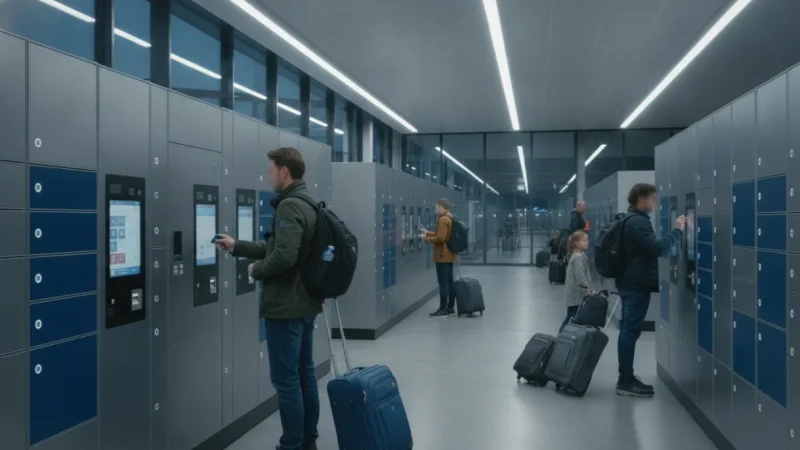
For accommodations, strategic positioning beats multiple hotels. Consider staying in your first city for nights one and two, then your second city for night three, skipping accommodation in your final city entirely if it’s just a half-day visit. This saves check-in/check-out time and reduces luggage stress. Book places near train stations or with luggage storage options.
Priority setting is non-negotiable. Choose 1-2 must see attractions per city—the things that make each destination unique. In Amsterdam, maybe it’s canal cruising and the Anne Frank House. In Brussels, the Grand Place and chocolate shops. In Bruges, a canal walk and beer tasting. Everything else is bonus content. Check out our guide on spending one day in Amsterdam for focused sightseeing strategies.
Transportation Strategy: Maximizing Movement Between Cities
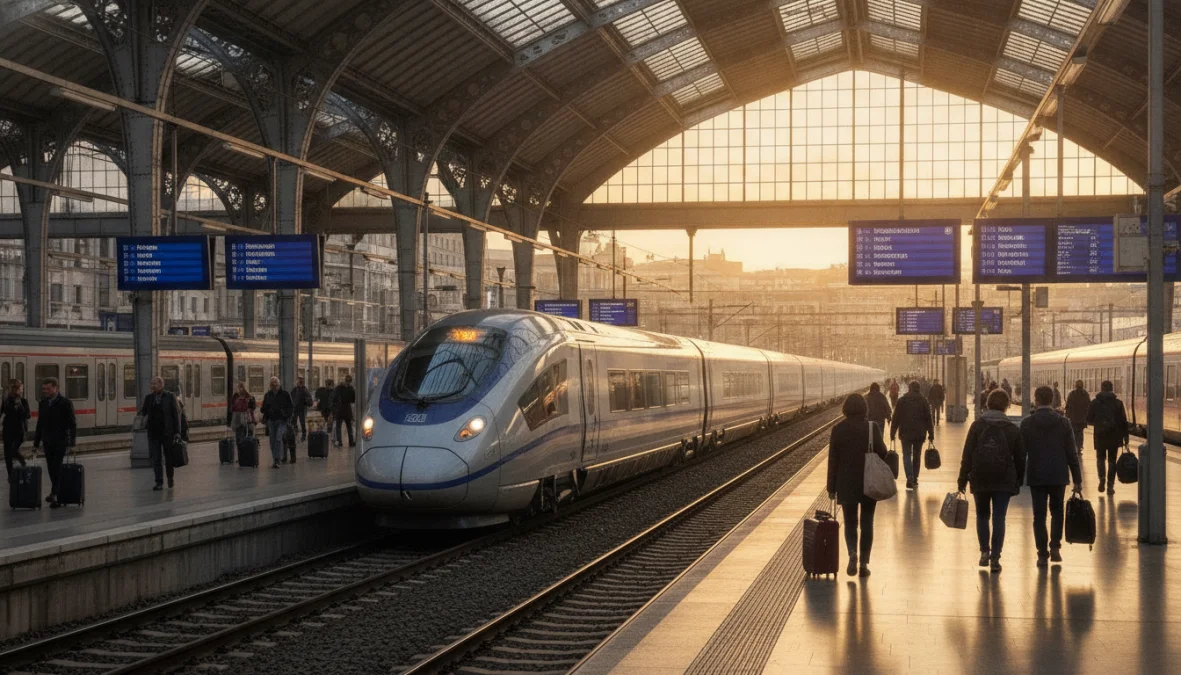
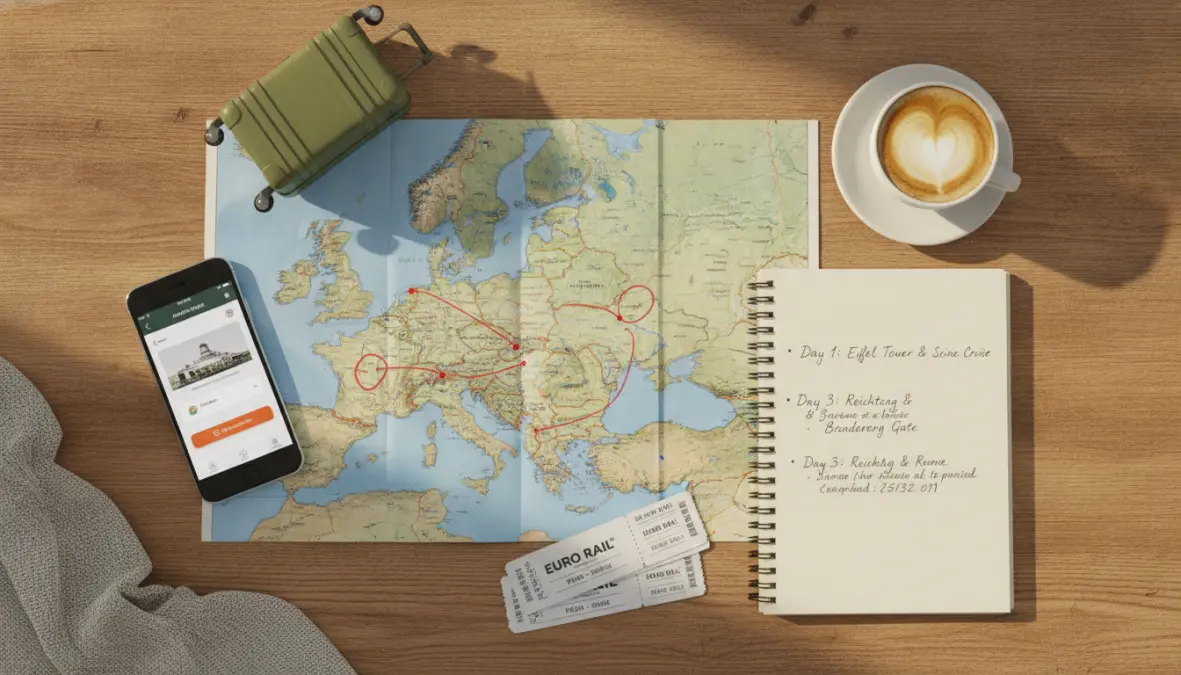
Your transportation between cities strategy can make or break a fast paced city tour. High-speed trains are usually your best friend in Europe—they’re faster than flying when you factor in airport time, drop you in city centers, and let you enjoy scenery. Book 2-3 months ahead for the best prices. Consider regional travel passes like Eurail or country-specific passes if traveling multiple segments.
Low-cost flights work for longer distances (over 4 hours by train), but remember the hidden time costs: getting to airports, security, boarding, baggage claim. If you fly, use only carry-on luggage to save 30-45 minutes per flight. Sometimes driving makes sense, especially for 3-4 people sharing costs, but factor in parking headaches in city centers.
Smart travelers optimize travel time by moving during meal times or evenings. A 6pm train means you’re not losing prime sightseeing hours. Overnight trains (like Vienna to Budapest) are gold—you travel while sleeping, saving both time and accommodation costs. The key is treating travel time as part of the experience, not dead time.
Daily Structure: Sample Hour-by-Hour Schedule
Here’s a realistic weekend itinerary for visiting three cities using Amsterdam-Brussels-Bruges as an example:
Friday: Arrive Amsterdam 6pm, check into hotel near Central Station, evening canal walk and dinner in Jordaan district (3-4 hours of experience).
Saturday: Wake 7am, breakfast and morning exploring Anne Frank House area until noon, 12:30pm train to Brussels (2 hours), arrive 2:30pm, check luggage at station, afternoon exploring Grand Place and eating Belgian fries, evening beer tasting, sleep in Brussels (8 hours city time).
Sunday: Wake 7am, morning Brussels exploration until 11am, train to Bruges (1 hour), arrive noon, walk medieval center, canal cruise, chocolate shopping, 5pm train back to Brussels or Amsterdam for departure (5 hours city time).
Notice the built-in buffer time? Trains get delayed. You’ll want an extra coffee. That’s life. Never schedule connections tighter than 30 minutes, and leave your final evening loose for delays. For more detailed single-city scheduling, our Vienna weekend guide shows how to structure 48 hours efficiently.

Pro Tips for Successful Weekend City Hopping
The biggest mistake in weekend getaway multiple cities planning? Overscheduling. Yes, you want to maximize time, but scheduling every hour leads to burnout. Leave 20-30% of your time unplanned for spontaneous discoveries—that random street market, the café a local recommended, or just sitting in a plaza people-watching.
For accommodation strategies, staying in 1-2 hotels beats checking in and out of three different places. The time and mental energy saved is worth visiting one city as a day trip. Use luggage storage at train stations or hotels (most offer this even after checkout) to explore hands-free.
Download essential apps: Rome2Rio for route planning, city-specific public transport apps, and offline maps (Google Maps lets you download regions). City passes can save money and time if you’re hitting 3+ attractions, but do the math first—they’re not always worth it for quick city tours.
Choose attractions wisely. Skip lengthy museum visits unless that’s truly your passion. Focus on experiences unique to each city—things you can’t do elsewhere. In Barcelona, it’s Gaudí architecture. In Edinburgh, it’s castle views and whisky. Use our Barcelona 48-hour guide to see how to prioritize must-sees.
For packing light tips, stick to one carry-on bag for the entire trip. Wear your bulkiest shoes while traveling. Pack layers instead of multiple outfits. Use packing cubes to stay organized. Remember: you’re moving between cities multiple times, and every kilogram matters.
Eat strategically at street markets and food halls—they’re faster than sit-down restaurants, often cheaper, and more authentic. This approach aligns perfectly with our culinary weekend escapes philosophy. Take photos, but don’t let photography dominate your experience. Set specific “photo times” rather than stopping every five minutes.
FAQ: Multi-City Weekend Travel
How much does a 3-city weekend trip cost?
Expect €300-600 per person for budget travel (hostels, regional trains, street food) or €600-1200 for mid-range (3-star hotels, high-speed trains, casual dining). Transportation typically eats 40% of the budget, accommodation 35%, and food/activities 25%.
Is visiting 3 cities in a weekend too rushed?
Only if you try to see everything. With proper planning focusing on 1-2 highlights per city, it’s energizing rather than exhausting. Think of it as sampling rather than deep-diving—you can always return to favorites later.
What’s the ideal distance between cities for weekend travel?
Keep it under 2-3 hours between each city. This means roughly 150-250km if traveling by train or car. Anything longer eats too much of your precious weekend hours.
Should I book hotels in each city or use one base?
For three cities, book two hotels maximum—one in your primary city, one in your secondary. Visit the third city as a day trip to avoid constant packing/unpacking. Central locations near transportation hubs justify higher prices.
How do I pack light for multiple cities?
Stick to carry-on only: one versatile outfit per day, worn twice with different accessories. Pack layers, wear bulkiest items during travel, and choose quick-dry fabrics you can rinse in sinks. Packing cubes keep everything organized during multiple moves.
Ready to turn your next weekend into a multi-city adventure? The key is balancing ambition with realism, planning with spontaneity, and movement with moments of stillness. Whether you’re exploring European cities in spring or traveling solo, the three-city weekend formula opens up possibilities you never knew existed. Start planning, pack that carry-on, and get ready to collect experiences at triple speed.