How to Book City Tourist Cards in Europe: Complete Savings and Attractions Pass Guide

You’re standing in front of the Colosseum with a ticket line that snakes around the block, watching people with cards walk straight in. Or maybe you’re calculating whether three museum visits justify a €60 tourist pass. Sound familiar? City tourist cards Europe can be absolute game-changers or complete wallet-drainers—the difference comes down to knowing how to pick and use them smartly. Let’s break down everything you need to book the right pass and actually save money on your European adventure.
What Are City Tourist Cards and How They Save You Money
City tourist cards Europe are essentially bundled passes that give you access to attractions, museums, and often public transport for a fixed price. Think of them as all-you-can-see tickets for a city. These tourist discount cards come in three main flavors: transport-only cards (like London’s Oyster), attractions-only passes (such as the Paris Museum Pass), and combination cards that bundle everything together (like the Amsterdam I amsterdam City Card).
Here’s where the sightseeing cards savings get real. Take Paris: the Louvre costs €22, Versailles €27, and the Arc de Triomphe €13. That’s €62 for just three attractions. The Paris Museum Pass costs €62 for two days but includes over 60 museums and monuments. Visit four or five spots, and you’re already ahead. In Rome, individual Colosseum, Forum, and Borghese Gallery tickets run about €48 total, while the Roma Pass covers these plus transport for €38.50.
But here’s the catch: museum pass deals only work if you actually use them. Families often benefit most because child versions offer proportional discounts, and the skip-the-line benefits mean less time managing cranky kids in queues. First-time visitors usually save more too—you’re hitting major attractions anyway. Solo travelers on a relaxed schedule? You might do better cherry-picking individual tickets.
London’s case is instructive: the London Pass costs around £104 for two days, but the Tower of London (£34.80), Westminster Abbey (£27), and a Thames cruise (£22) alone total £83.80. Add two more attractions and transport, and you’re saving £50+. If you’re planning a perfect city break, these calculations become crucial budget decisions.
How to Choose and Book the Right City Card for Your Trip
Choosing the right attraction passes europe isn’t rocket science, but it does require some homework. Start with your itinerary: list what you actually want to see. Check if those attractions are included in available passes. Many travelers make the mistake of buying a card for attractions they never visit.
Your trip duration matters enormously. Most city cards booking guide experts recommend cards only if you’re staying 2-4 days. Too short and you can’t maximize value; too long and you’d need to museum-marathon yourself into exhaustion. Amsterdam’s card comes in 24, 48, 72, or 96-hour versions—pick based on your energy levels, not wishful thinking.
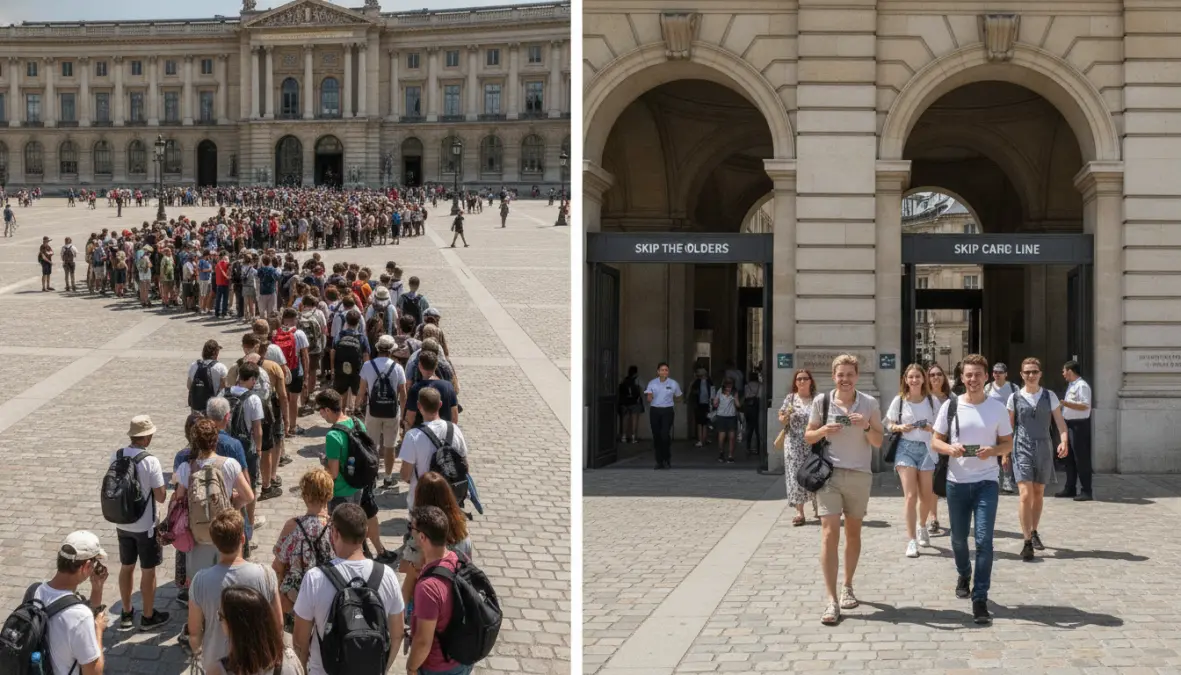
Timing your booking depends on your travel style. Booking in advance through official websites or platforms like GetYourGuide locks in your pass and lets you plan around it. Last-minute purchases work if you’re flexible, though some cities offer better last-minute weekend deals when you buy on arrival. Skip the line passes are particularly valuable during peak summer months—that priority access can save you literally hours.

Key Features to Compare When Evaluating Tourist Passes
When doing your tourist pass comparison, create a simple checklist. First, distinguish between included attractions (fully covered) and discounted ones (you still pay, just less). The validity period matters: is it consecutive calendar days or flexible hours from first use? Barcelona Card gives you consecutive days, while some museum passes start when you first scan them.
Transport inclusion is huge if you’re staying outside the center. Calculate your likely metro/bus costs separately—sometimes it’s cheaper to buy a transport card separately. The refund policy and activation process vary wildly. Mobile passes offer convenience but require charged phones and sometimes spotty app performance. Physical cards mean pickup logistics but no battery anxiety.
Check booking fees carefully. Third-party platforms sometimes add €5-10 in “service charges” that official sites don’t. Read cancellation terms—some cards offer full refunds up to 24 hours before, others are non-refundable once purchased.
Where to Book City Cards: Official Sites vs Booking Platforms
The eternal question: official website or GetYourGuide/Viator? Official sites (like parismuseumpass.fr or londonpass.com) usually offer the best prices and most reliable customer service. They’re the gold standard. But third-party platforms bundle multiple cities, offer comparison tools, and sometimes have exclusive packages that combine cards with rail passes for European weekend trips.
Use platforms when you want one-stop shopping for multi-city trips or need reviews from recent users. Stick with official sites when booking single-city cards or during promotional periods (cities often run direct discounts). Red flags to watch: unusually low prices, no clear refund policy, sites requiring full payment without confirmation details, or “limited time” pressure tactics that seem endless.
Before clicking “buy,” verify what you’re actually getting. Does it include the current exhibition at that museum? Is transport valid for airport transfers or just central zones? Does “skip the line” mean truly no queue, or just a different, sometimes equally long, queue?
Maximizing Your City Card Benefits: Tips and Common Mistakes to Avoid
You’ve bought your card—now squeeze every euro out of it. The golden rule for sightseeing cards savings: start early and hit expensive attractions first. Activate your pass at opening time on day one at the priciest museum. In Berlin, that means starting at the Pergamon Museum (€12) rather than the free-after-4pm East Side Gallery. If you’re doing a one day in Berlin sprint, this matters enormously.
Plan your route geographically. Don’t zigzag across the city burning time and energy. Cluster nearby attractions on the same day. Vienna’s Kunsthistorisches Museum and Natural History Museum face each other—knock out both in one morning. Those skip the line passes work best when you arrive just before the non-cardholders’ queue builds (usually 30 minutes after opening).
Common mistakes? Not checking opening hours and discovering your target museum is closed Mondays. Choosing a 72-hour pass when you only have energy for 48 hours of sightseeing. Visiting cheap attractions that cost €5 individually when you could be hitting €20+ venues. Forgetting to actually activate the pass—some require manual activation, and the clock starts ticking regardless.
Track your savings with a simple notes app. Each attraction visited, note what you would’ve paid. This isn’t just about justifying the purchase—it helps you understand your patterns for future trips. Many cities offer free museum days (Paris first Sundays, Berlin’s Lange Nacht der Museen)—don’t waste your paid pass on those days.
When do museum pass deals NOT make sense? If you’re the type who spends four hours in one museum, goes to bed by 9pm, or prefers wandering neighborhoods over structured sightseeing. If you’re visiting during winter when you can walk on to most attractions. If your interests are super niche and only two included attractions appeal. For shopping-focused trips, skip the tourist card.
FAQ: City Tourist Cards and Attraction Passes
Are city tourist cards worth it?
They’re worth it if you visit 3-5 major attractions daily and value skip-the-line access. Calculate your planned attractions’ individual costs versus the card price. Generally, cards save 20-40% for active sightseers but lose money for relaxed travelers hitting 1-2 spots daily.
Can I share my city card with someone else?
No. City tourist cards Europe are non-transferable and often require ID or photo verification. Some attractions scan cards electronically and track entries. Don’t risk it—you’ll both be denied entry.
Do children need separate tourist cards?
Depends on the city. Many European cities offer free museum entry for under-12s or under-18s even without cards. Check this before buying kids’ passes. Sometimes a family card (2 adults + 2-3 kids) offers better value than individual purchases.
Can I book city cards last minute?
Yes, most cards are available for immediate purchase online with instant mobile delivery or same-day pickup at designated locations. However, some limited-capacity special access features (like reserved time slots) may be sold out during peak season.
What happens if it rains and I can’t use my pass?
Weather isn’t a valid refund reason for most tourist discount cards. The validity period keeps ticking. Pivot to indoor attractions—this is where having a comprehensive pass pays off. Most major cities have dozens of covered museums and galleries.
Do city cards include public transport?
Not always. London Pass doesn’t include transport (buy Oyster separately). Amsterdam and Barcelona cards do. Rome’s pass includes transport; Paris Museum Pass doesn’t. Always check the specific card’s details—this significantly affects total value, especially if you’re planning multi-city European weekends.
The smartest travelers treat city cards booking guide research as part of trip planning, not an afterthought. Run the numbers, know your sightseeing style, and remember: the best deal is the one you actually use. Whether you’re a museum marathoner or a casual culture-seeker, there’s probably a pass configuration that works—you just need to find it before you find yourself in that Colosseum queue wondering what could’ve been.