Best Portable Phone Chargers for European Travel: Complete Power Bank Guide
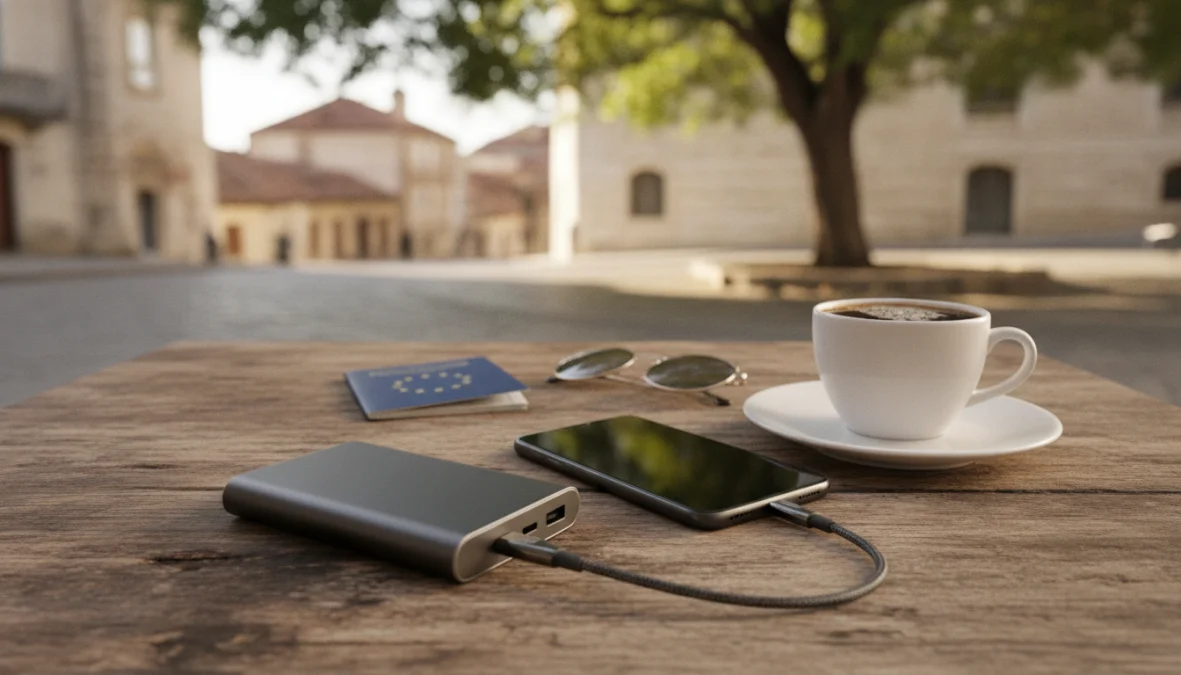
Picture this: you’re exploring the charming streets of Prague, snapping photos of the astronomical clock, when your phone dies at 3%. No Google Maps, no translation app, no way to share that perfect sunset over the Charles Bridge. Sound familiar? Whether you’re hopping between European cities on budget airlines or spending hours on scenic train rides, a reliable power bank for Europe travel isn’t just convenient—it’s essential. Unlike regular wall chargers, a quality portable charger for Europe keeps your devices alive during those long days of sightseeing, unexpected delays, and those moments when you desperately need directions in a city where you don’t speak the language.
Why You Need a Power Bank for European Travel
Let’s clear up a common misconception first: many travelers worry about voltage compatibility when traveling to Europe. While it’s true that Europe uses 220V electrical systems (different from North America’s 110V), this doesn’t affect your power bank for Europe travel at all. Modern portable battery packs are universally compatible—they charge via USB, which is a standardized 5V worldwide. So forget about voltage converters for your power bank; you won’t need one.
What you do need is a way to keep your travel electronics powered during those marathon sightseeing days. European cities are incredibly walkable, and you’ll likely spend 8-12 hours exploring before returning to your accommodation. Between navigation apps, photography, booking reservations, and staying connected, your smartphone battery rarely lasts a full day. A phone charger for European travel means you won’t miss capturing the Eiffel Tower at sunset or finding that hidden tapas bar because your phone died.
Then there are the airline carry-on regulations to consider. European airports follow similar rules to most international standards: power banks must travel in your carry-on luggage, never checked baggage. Most European airlines permit power banks up to 100Wh (around 27,000mAh), though some budget carriers have stricter limits. If you’re planning weekend trips on budget airlines, check their specific policies beforehand to avoid last-minute surprises at security.
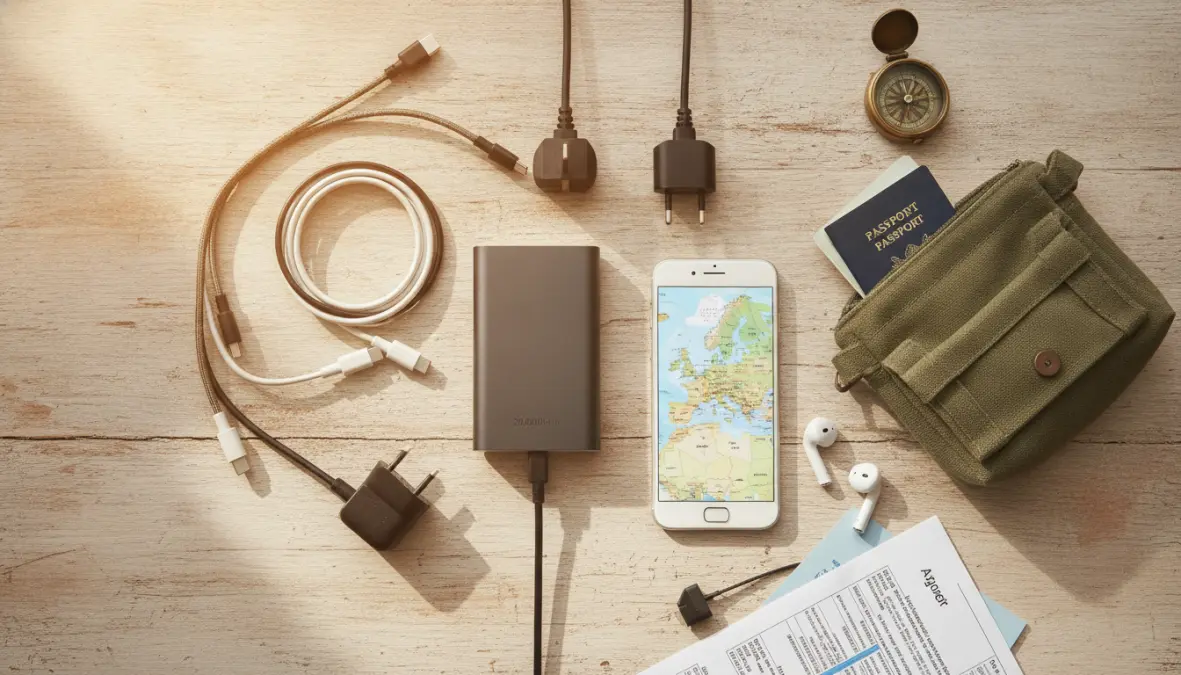
One more thing: a power bank isn’t the same as a travel charger adapter. An adapter simply changes the plug shape to fit European outlets, while a power bank stores electrical energy for on-the-go charging. You might need both: an international plug adapter to charge your power bank at your hotel, and the power bank itself to keep devices alive during the day.
Top 5 Portable Chargers for European Travel
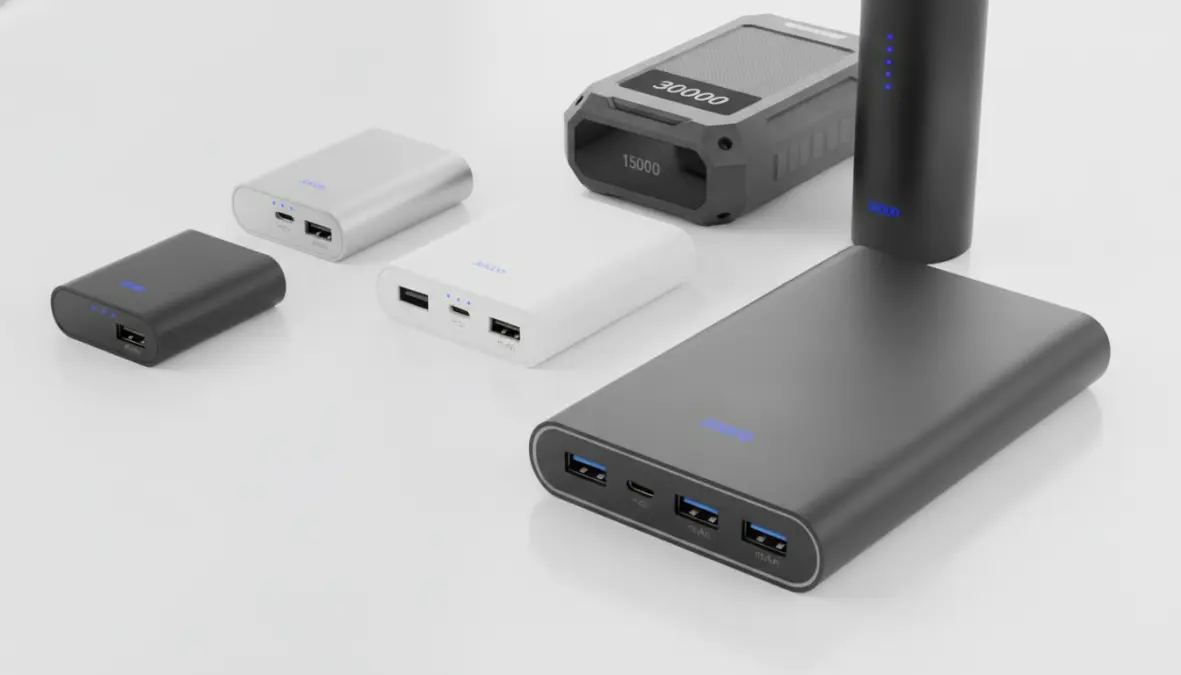
Choosing the best power bank for travel depends on your specific needs—trip duration, number of devices, and how much weight you’re willing to carry. Here’s what makes a travel power bank ideal for European adventures: appropriate mAh capacity (10,000-20,000mAh hits the sweet spot), multiple USB charging ports, fast charging technology, and compliance with European safety certifications.
Compact Options Under 10,000mAh
For ultralight travelers exploring European cities on solo weekends, compact power banks under 10,000mAh offer the perfect balance. These pocket-sized lifesavers typically weigh 150-200 grams and slip easily into a daypack or even a jacket pocket.
The Anker PowerCore Slim 10000 PD (about €35) delivers one full smartphone charge plus a partial second charge, features USB-C Power Delivery for fast charging, and weighs just 212g. Perfect for day trips around Barcelona or Venice when you’re traveling light. The downside? Limited capacity means you’ll need to recharge it nightly at your accommodation.
Another excellent option is the RAVPower 10000mAh Mini (around €28), which includes dual ports for charging two devices simultaneously—handy when traveling with a partner. Its compact design makes it ideal for shopping days in Milan or Paris when you don’t want bulk weighing you down.
High-Capacity Power Banks (20,000mAh+)
Planning a two-week European adventure or traveling with family? High-capacity power banks offer serious endurance. A 20,000mAh unit typically provides 4-5 full smartphone charges or 1-2 tablet charges, perfect for long train journeys through the Alps or multi-day island-hopping weekends.
The Anker PowerCore Essential 20000 PD (approximately €50) features dual USB ports plus USB-C, supports fast charging protocols, and remains within airline carry-on regulations at exactly 74Wh. At 343g, it’s noticeably heavier, but the trade-off is worth it for longer trips. This capacity is particularly valuable when you’re relying on offline navigation apps that drain batteries faster.
For premium seekers, the Zendure SuperMini 20000mAh (around €80) packs impressive capacity into a surprisingly compact form factor, weighs just 345g, and includes a durable aluminum housing. It features pass-through charging (charge the power bank while simultaneously charging your devices) and multi-device compatibility—essential when carrying smartphones, tablets, and e-readers.
Remember the 100Wh limit for flights: 27,000mAh is the maximum you can carry on European airlines. Anything larger gets confiscated at security, so stick to 20,000-25,000mAh models to stay safely within limits while maximizing capacity.
Essential Features and Buying Considerations
Beyond basic capacity, several features separate mediocre portable battery packs for Europe from truly excellent travel companions. Understanding these specifications helps you make the right choice for your travel style.
Capacity vs. Trip Length: Calculate based on your devices and trip duration. A typical smartphone has a 3,000-4,000mAh battery. For a weekend trip, 10,000mAh suffices. Week-long adventures benefit from 20,000mAh. Two-week journeys? Consider the maximum allowed capacity or plan to recharge your power bank at accommodations every few days.
Fast Charging Protocols: Look for Power Delivery (PD) or Quick Charge (QC) compatibility. These technologies can charge your devices 50-70% faster than standard charging—crucial when you have a 30-minute café break before your next tour. A USB-C power bank with PD is particularly valuable for modern smartphones and can even charge some laptops.
Port Configuration: Multiple ports let you charge several devices simultaneously. If you’re traveling with a companion or carry both a phone and tablet, dual ports are essential. Some premium models offer three or four ports, though more ports often mean slower charging unless the power bank specifically supports simultaneous fast charging.
Built-in Cables vs. Separate: Power banks with integrated cables reduce what you need to carry, but limit flexibility. Separate cables offer more versatility (you can upgrade to faster cables) but mean more items to pack. For European travel, I recommend separate cables—they’re easier to replace if lost.
Durability and Build Quality: European adventures involve cobblestone streets, crowded metro rides, and the occasional rain shower. Look for power banks with rubberized exteriors or aluminum casings. LED battery indicators show remaining capacity—essential for planning your charging strategy during long days exploring Europe’s culinary hotspots.
Here’s what you don’t need: a voltage converter for your power bank. As mentioned earlier, USB charging is universal. However, you will need an appropriate travel adapter to plug your power bank’s charging cable into European outlets (Type C or F plugs). These are completely different products serving different purposes—don’t confuse them when shopping.
FAQ: Power Banks for European Travel
Can I bring a power bank on European flights?
Yes, absolutely. Power banks must travel in your carry-on luggage, never in checked baggage due to fire safety regulations. European airlines typically allow power banks up to 100Wh (approximately 27,000mAh) without special permission. Some budget carriers have stricter rules, so verify before flying. Always keep your power bank accessible during security screening.
Do I need a voltage converter for my power bank in Europe?
No. Power banks charge and discharge via USB, which is standardized worldwide at 5V. The 220V European electrical system doesn’t affect your power bank’s operation. You may need a plug adapter to charge the power bank itself from European outlets, but no voltage conversion is necessary.
What mAh capacity is best for a 2-week European trip?
For a two-week trip, 20,000mAh offers the best balance. This capacity provides multiple charges without daily recharging, yet remains well within airline limits. If you’re staying in hotels nightly, 15,000mAh suffices. For camping or rural areas with limited charging access, maximize at 25,000mAh.
Are power banks cheaper in Europe or should I buy before departure?
Prices are generally comparable, but buying before departure is smarter. You’ll want your power bank from day one of travel (including the flight), and you’ll avoid language barriers or compatibility questions when purchasing abroad. Plus, you can research reviews and compare options at leisure. If you’re hunting for last-minute European deals, add a power bank to your pre-trip checklist.
Can I charge my laptop with a travel power bank?
Some high-capacity power banks with USB-C Power Delivery can charge laptops, but you’ll need significant capacity (20,000mAh minimum) and specific PD compatibility. Check that both your laptop and power bank support PD at sufficient wattage (45W+ for most laptops). This feature adds weight and cost, so only invest if you truly need laptop charging on-the-go.
What’s the difference between a power bank and a travel adapter?
A power bank stores electrical energy in batteries, allowing you to charge devices anywhere without an outlet. A travel adapter simply changes plug shapes to fit different countries’ outlets—it doesn’t store or convert electricity. For European travel, you need both: an adapter to charge your power bank in European outlets, and the power bank itself for portable charging during your adventures.
Whether you’re planning spring weekend getaways or extended European explorations, the right power bank transforms your travel experience. No more anxiety about dying phones, missed photo opportunities, or getting lost without navigation. Choose based on your specific needs—capacity, weight, and budget—and you’ll wonder how you ever traveled without one. Safe travels, and may your devices always stay charged!