How to Stay Connected in Europe: Complete SIM Card and eSIM Guide
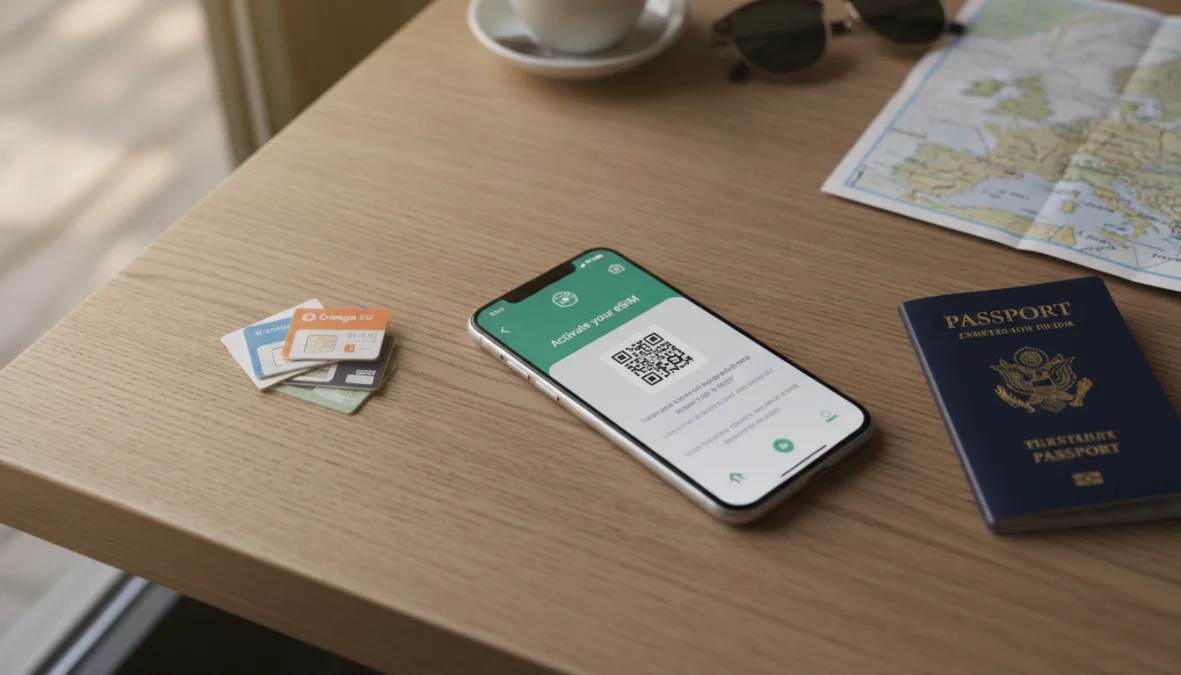
Landing in Europe and losing your connection to the digital world? Not happening on your watch. Whether you’re hopping between countries on spontaneous weekend trips or planning a grand tour, staying connected is non-negotiable. Your maps, booking confirmations, and those epic Instagram stories all depend on solid mobile data. The good news? This europe sim card guide breaks down everything you need to know about getting online across the continent without breaking the bank or drowning in roaming charges.
Understanding Your Connectivity Options: SIM Cards vs eSIMs for Europe
When it comes to travel connectivity in Europe, you’ve got two main players: traditional prepaid sim card europe options and the newer esim europe technology. Both keep you connected, but they work quite differently.
A european sim card is the physical chip you’ve been popping into phones for years. You buy it, swap out your home SIM, insert the new one, and you’re good to go. eSIMs, on the other hand, are entirely digital—no physical card needed. They’re embedded in your phone and activated through a QR code or app.
| Feature | Physical SIM Card | eSIM |
|---|---|---|
| Activation | In-person or mail delivery | Instant digital download |
| Device Compatibility | All unlocked phones | Newer models only (iPhone XS+, Pixel 3+, Samsung S20+) |
| Purchase Timing | Before or after arrival | Before departure recommended |
| Switching Between Plans | Requires physical swap | Switch digitally in settings |
| Dual SIM Capability | Limited | Easy dual-line management |
The biggest advantage of either option over international phone plans? Cost. Roaming charges from your home carrier can hit $10-15 per day, while a local europe travel sim typically costs $20-50 for the entire trip with generous data allowances. No surprise bills, no daily fees—just straightforward prepaid connectivity.
What is an eSIM and Why It’s Perfect for European Travel
Think of an eSIM as your SIM card gone digital. Instead of a physical chip, your phone has a built-in programmable SIM that can store multiple carrier profiles. You purchase a plan online, receive a QR code via email, scan it with your phone’s camera, and boom—you’re connected.
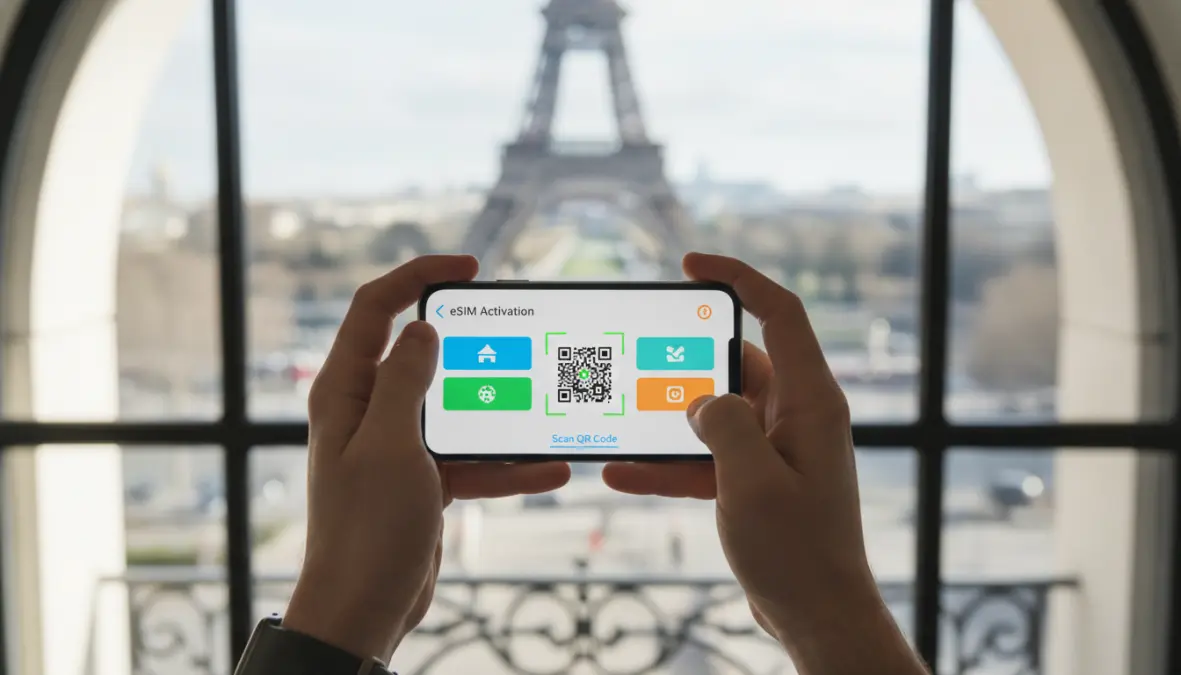
The activation process typically takes under five minutes. Open your phone’s settings, navigate to cellular or mobile data, select “Add eSIM,” scan the QR code from your provider, and follow the prompts. You can do this from your couch before departure or the moment you land—no hunting for a shop or waiting in airport queues.
The real magic? Managing multiple profiles. Keep your home number active for important calls while using your European data sim card europe profile for internet. iPhone models from XS onward, Google Pixels from 3 and later, and Samsung Galaxy devices from S20 upward all support eSIM technology. Perfect if you’re traveling light with just carry-on luggage and want zero fuss.
Traditional Prepaid SIM Cards: When They Make Sense
Despite eSIM advantages, physical prepaid sim card europe options still rule for certain situations. Got an older phone? Physical SIM is your only option. Want to share a data plan between devices by swapping the card? You’ll need the physical version.
Where to buy? European airports typically have multiple carrier kiosks right in arrivals—expect to pay €20-40 for tourist-friendly packages. Local mobile operators stores in city centers often offer better deals (€15-30) but require more hunting. Online purchases before departure mean the SIM arrives at your home, ready to activate upon landing.
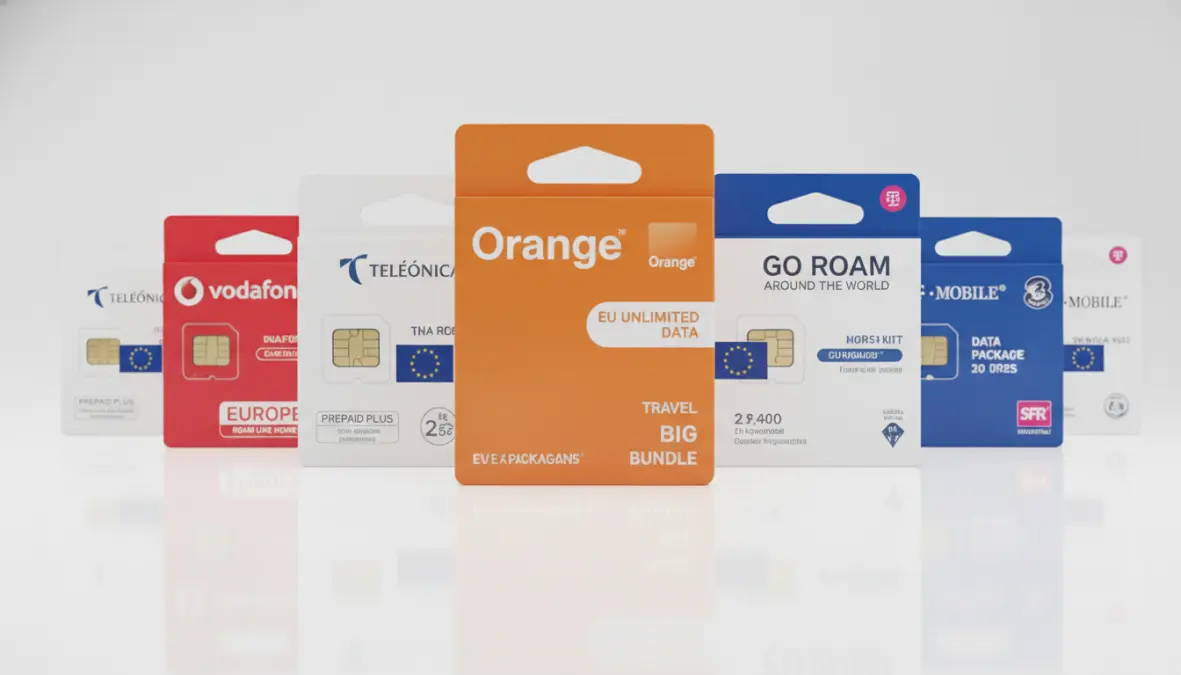
Major providers like Orange Holiday, Vodafone Traveller, and Three’s Feel at Home offer multi-country coverage specifically designed for tourists. You’ll usually need your passport for registration, and activation happens either immediately or within hours of first use.
Choosing the Best SIM Card for Your European Trip
Finding the best sim card for europe depends entirely on your travel style. A weekend break to one city needs different coverage than a three-week multi-country adventure.
First, assess your needs: How long are you staying? Visiting one country or ten? Will you stream Netflix or just check maps and WhatsApp? A short city break might need just 3-5GB, while a month-long journey could demand 20GB+.
For best prepaid sim card for traveling in europe options, consider these popular providers:
- Airalo (eSIM): Europe regional plans from $5 for 1GB to $42 for 20GB, validity 30 days, covers 39+ countries
- Holafly (eSIM): Unlimited data plans from $19.90 for 5 days to $87 for 30 days across Europe
- Orange Holiday Europe (Physical/eSIM): 30GB with 120 minutes calls, €39.99, 14 days, 30+ countries
- Vodafone Traveller (Physical): Various country-specific and regional options, €20-50 range
- Three UK Feel at Home (Physical): If staying in UK-friendly roaming zones, domestic plans work across multiple EU countries
For quick trips, eSIM providers like Airalo offer incredible flexibility—buy exactly what you need without paying for unused days. Planning to explore Europe’s shopping capitals or catch spring festivals? Multi-country coverage is essential.
Coverage and Data Plans: What to Look For
Understanding network coverage makes the difference between smooth connectivity and frustrating dead zones. Single-country SIMs offer the best local coverage and speeds but become useless once you cross borders. Multi-country European plans use roaming agreements, connecting you to partner networks across the EU.
Here’s the data reality check: Google Maps uses about 5MB per hour of navigation. Instagram scrolling consumes roughly 100MB per hour. Video calls? About 300MB per hour. Streaming a movie? Up to 3GB. For most travelers, 1GB per day provides comfortable coverage for navigation, messaging, social media, and occasional video calls.
Check for 4G/5G support—most European cities offer excellent 5G coverage, but rural areas might drop to 3G. Verify the plan’s validity period matches your trip length. Nothing worse than your data expiring two days before departure.
EU roaming regulations mean SIMs purchased within EU countries generally work across all member states without extra charges. However, some providers limit “fair use” roaming to 30-90 days, so long-term travelers should check policies.
How to Buy and Activate Your Europe SIM Card or eSIM
Ready to get connected? Here’s your step-by-step europe sim card guide for both options.
For eSIM activation:
- Verify your phone supports eSIM (Settings > About > Digital SIM or eSIM)
- Choose your provider and purchase a plan online
- Receive QR code via email (usually within minutes)
- Go to Settings > Cellular/Mobile Data > Add Cellular Plan
- Scan the QR code with your camera
- Label the plan (e.g., “Europe Travel”) and set as primary data line
- Enable data roaming for the eSIM profile
- Test connectivity by opening a browser
Most providers recommend installing but not activating until you arrive, though some plans start immediately upon installation. Read the fine print.
For physical SIM cards:
- Purchase online (arrives pre-departure) or at European airport/local shop
- Bring your passport for registration requirements
- Power off your phone and eject your home SIM (keep it safe!)
- Insert the European SIM card
- Power on and wait for network connection (2-10 minutes)
- If needed, manually enter APN settings (provided by carrier)
- Restart phone if connection doesn’t establish automatically
- Test with browser or messaging app
Troubleshooting tips: No connection? Check airplane mode is off, data roaming is enabled, and network selection is set to automatic. Still nothing? Manually select a network from available carriers. For eSIM issues, delete and reinstall the profile—you can typically reinstall from the same QR code.
Remember to unlock your phone before traveling. Contact your home carrier at least a week before departure to ensure your device works with international SIMs. Most carriers unlock phones that are fully paid off and past contract obligations.
Frequently Asked Questions
Do I need a SIM card for Europe or can I use my home carrier?
You can use your home carrier’s international plan, but expect $5-15 daily fees plus potential data caps. A local SIM or eSIM costs less for better coverage and higher data allowances, especially for trips over a week.
Can I use one SIM card in all European countries?
Yes! Multi-country European SIMs cover 30+ countries across the EU and associated regions. Check your specific provider’s coverage map, as some exclude Switzerland, UK, or Balkan countries.
How much does a Europe SIM card cost?
Physical SIMs range €15-40 depending on data and validity. eSIM plans start around $5 for minimal data and go up to $90 for unlimited monthly plans. Budget €25-35 for most two-week trips with moderate data needs.
Do I need to unlock my phone?
Absolutely. Locked phones only work with your home carrier. Contact them 1-2 weeks before travel to request unlocking. It’s usually free if your contract is fulfilled and device is paid off.
What’s the difference between EU roaming and a local SIM?
EU roaming means using a SIM from one EU country in another without extra fees (thanks to EU regulations). A local SIM is purchased in the specific country you’re visiting. Multi-country European SIMs use roaming agreements to work across borders.
Can I keep my WhatsApp number?
Yes! WhatsApp is tied to your original phone number, not your SIM card. You’ll keep all chats and contacts. Just ensure you can receive SMS to your home number for verification if needed, or use eSIM dual-SIM functionality to maintain both numbers active.
How do I top up my prepaid SIM card in Europe?
Most providers offer app-based top-ups using credit cards. Physical vouchers are available at convenience stores, tobacco shops, and carrier stores. Many eSIM providers allow instant top-ups through their apps or websites.
Staying connected across Europe doesn’t require a PhD in telecommunications anymore. Whether you’re navigating train routes between cities, booking budget flights, or joining walking tours, reliable mobile data keeps your trip smooth. Choose the option that fits your devices and travel style, activate before or upon arrival, and enjoy seamless connectivity throughout your European adventure. Now go explore—your maps app is ready.