One Day in Budapest: Thermal Baths, Ruin Bars, and Danube Bridges

Budapest in a single day? It sounds ambitious, but the Hungarian capital’s compact center and efficient public transport make it totally doable. Sure, one day in budapest won’t let you explore every corner of this stunning city, but it’s enough to experience the highlights that make it legendary: healing thermal waters that have been soothing locals for centuries, breathtaking bridges spanning the mighty Danube, and those quirky ruin bars you’ve seen all over Instagram. The key is prioritizing the essentials and embracing the city’s vibrant energy from sunrise to last call.
Morning: Soaking in Budapest’s Famous Thermal Baths
Start your budapest itinerary the right way: submerged in warm, mineral-rich water. The budapest thermal baths aren’t just tourist attractions—they’re a genuine part of local culture, dating back to Roman times and perfected during the Ottoman occupation. For a single day visit budapest, you’ll need to choose wisely among the city’s many options.
Széchenyi Baths in City Park is the most iconic choice and often considered one of the best thermal baths in budapest. Its bright yellow Neo-Baroque building houses 18 pools, including three massive outdoor ones where you can float under the sky even in winter, steam rising around you. It opens at 6 AM (9 AM on weekends), and arriving right when doors open means smaller crowds and better photo opportunities. Expect to spend around 7,000-8,000 HUF for a weekday entry. Budget 2-3 hours here, including locker time and navigation.
Gellért Spa offers a more refined, Art Nouveau experience with stunning architecture and smaller crowds, though it’s pricier and less Instagram-famous. Rudas Baths provides the most authentic Ottoman atmosphere with its octagonal pool under a Turkish dome, plus a rooftop pool with Parliament views—but it’s smaller and can feel cramped.
Pro tip: Bring your own towel and flip-flops to save on rental fees. Wear your swimsuit under your clothes for faster changing. Most importantly, don’t skip the thermal pools for the swimming pools—the warm, bubbly mineral water is the whole point.

Afternoon: Exploring Budapest’s Iconic Landmarks and Danube Bridges
After drying off, it’s time to tackle the budapest attractions that define the city’s skyline. The things to do budapest afternoon list is long, but with strategic planning, you can hit the highlights without feeling rushed. The Danube River divides the city into hilly Buda and flat Pest, and the bridges connecting them are attractions in themselves.
Start on the pest side at the magnificent Parliament Building, a Gothic Revival masterpiece that looks like it belongs in a fairy tale. While interior tours require advance booking, the exterior view from Kossuth Square is spectacular and free. Walk south along the riverbank toward the danube bridges budapest, stopping for lángos (Hungarian fried bread) from a street vendor for a quick, delicious lunch.
The Danube Bridges: Walking Between Buda and Pest
The Chain Bridge is Budapest’s oldest and most photographed span, with its stone lions guarding both ends. A walking tour budapest bridges style approach means you’ll cross it on foot to reach the Buda side—the views mid-bridge are unbeatable, with Parliament upstream and Buda Castle looming above you. Liberty Bridge, painted green and adorned with golden Turul birds, offers equally stunning perspectives and is slightly less crowded. Margaret Bridge connects to Margaret Island if you need a park break, though time-wise, save that for a future visit.
Each bridge tells a different historical story—Chain Bridge symbolized the unification of Buda and Pest, while Liberty Bridge was built for the 1896 Millennium celebrations. For photos, golden hour (late afternoon) makes them glow, but midday works fine too.
Must-See Landmarks in a Limited Timeframe
After crossing Chain Bridge, you have two options: take the funicular up to Buda Castle (quick but touristy) or walk the steep path (free, better views). The castle district offers cobblestone streets, the Matthias Church, and Fisherman’s Bastion—a neo-Gothic terrace with panoramic views worth the 1,000 HUF upper-level ticket. The lower terrace is free and nearly as impressive.
If you’re following a tight budapest day trip itinerary, skip the museum interiors and focus on exterior architecture and viewpoints. Back on the Pest side, St. Stephen’s Basilica deserves a quick interior visit (free, though donations encouraged) and you can climb the dome for 360-degree city views. A danube river cruise can substitute some walking if your feet are tired—hour-long cruises depart frequently and provide great bridge perspectives.
Evening: Discovering Budapest’s Legendary Ruin Bars
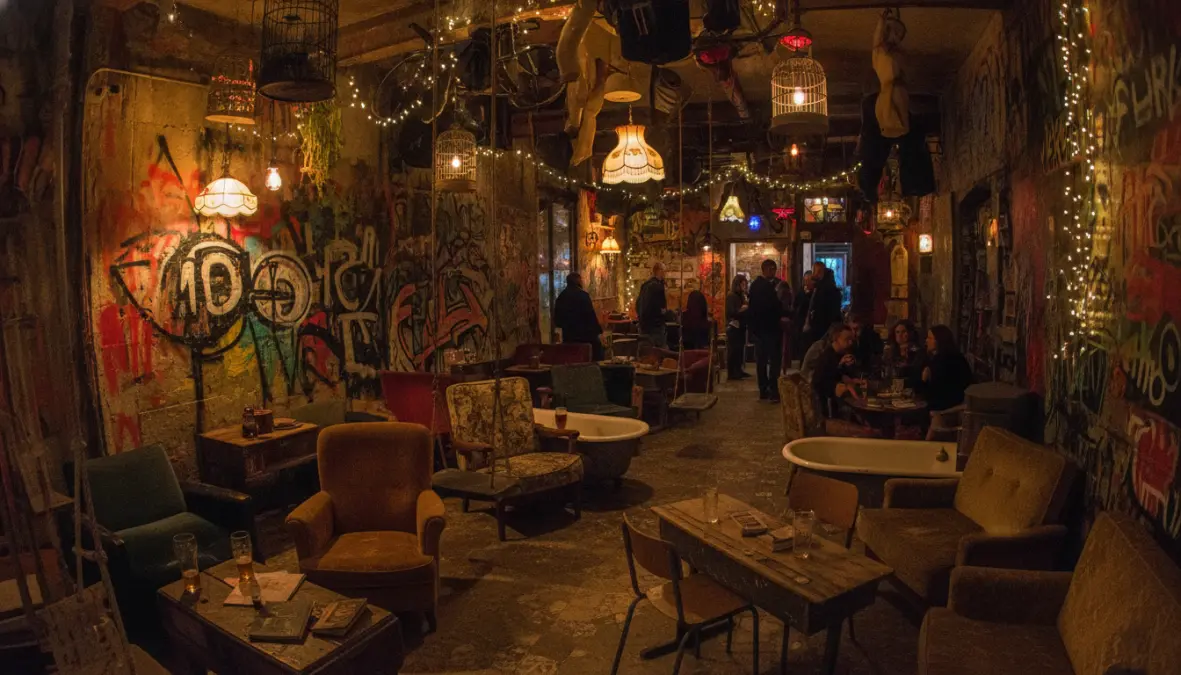
As darkness falls, it’s time for Budapest’s most unique contribution to nightlife: budapest ruin bars. These aren’t your typical watering holes. Born from the city’s abandoned buildings and forgotten courtyards in the Jewish Quarter, ruin bars transformed derelict spaces into eclectic wonderlands of mismatched furniture, surreal art installations, graffiti walls, and an anything-goes atmosphere.
Szimpla Kert is the grandfather of all ruin bars and remains the most famous. Located on Kazinczy Street, this sprawling complex fills an entire building with multiple rooms, each wildly decorated with random objects—a Trabant car wedged into a wall, bathtubs converted to seating, bicycle parts dangling from ceilings. It opens at 4 PM but hits its stride after 9 PM. Beers run 800-1,200 HUF, cocktails around 1,800-2,500 HUF. On Sunday mornings, it transforms into a farmers market—a completely different vibe worth experiencing if you’re staying longer.
For a budapest ruin bars guide strategy, start at Szimpla for the classic experience, then bar-hop to Instant-Fogas (one of the largest party complexes in Europe with multiple floors and music genres) or Mazel Tov (more polished, Mediterranean restaurant-meets-bar with a stunning garden courtyard). There’s no strict dress code—casual works fine—but the vibe ranges from bohemian to party-central depending on the venue and night.
The Jewish Quarter is compact enough to walk between bars in 5-10 minutes. If ruin bars aren’t your scene, Budapest offers excellent traditional Hungarian restaurants where you can try goulash, chimney cake, and Tokaji wine, or evening river cruises with city lights reflecting off the Danube.
FAQ: Planning Your One Day in Budapest
Is one day enough for Budapest?
Honestly? No. Budapest deserves at least 2-3 days to properly appreciate its thermal culture, architecture, history, and food scene. However, how to spend one day in budapest can still give you an excellent overview of the city’s highlights and leave you eager to return. Think of it as a greatest-hits tour rather than a deep dive.
What’s the best way to get around?
Budapest’s public transport (metro, trams, buses) is efficient and cheap. A single ticket costs 350 HUF, or grab a 24-hour travel card for 1,650 HUF if you’ll make multiple trips. Tram 2 along the Danube is scenic and useful. The city center is also very walkable—many attractions are within 20-30 minutes on foot. Taxis and Bolt (like Uber) work well for longer distances or late nights.
How much should I budget?
For the best things to see in budapest in one day, budget approximately 15,000-20,000 HUF (€40-55) per person: thermal bath entry (7,000 HUF), meals and snacks (5,000-7,000 HUF), transport (1,650 HUF), attractions like Fisherman’s Bastion (1,000 HUF), and drinks at ruin bars (3,000-5,000 HUF). Add more for souvenirs, river cruises, or fancier dining.
When is the best time to visit Budapest for a day trip?
Spring (April-May) and fall (September-October) offer pleasant weather and fewer crowds than summer. Winter has its charm with outdoor thermal baths steaming in cold air and Christmas markets, though days are shorter. If you’re planning day trips from nearby cities (similar to exploring day trips from Rome to surrounding attractions), weekdays are less crowded than weekends.
Do I need to book thermal baths in advance?
For szechenyi thermal bath budapest and other major baths, advance booking isn’t mandatory but recommended, especially on weekends or during peak summer months. Online tickets often offer small discounts and let you skip ticket lines (though you’ll still wait at entry). Booking the night before is usually sufficient.
One day in Budapest is like tasting a complex wine—you get the essential flavors, the character, the unique notes that make it special. You’ll leave tired, slightly waterlogged from the baths, buzzing from ruin bar adventures, and with a camera full of bridge photos. Most importantly, you’ll leave planning your return trip, because this city has a way of getting under your skin and making you want more.