Best Italian Hill Towns for a Spring Weekend: Tuscany and Umbria Gems
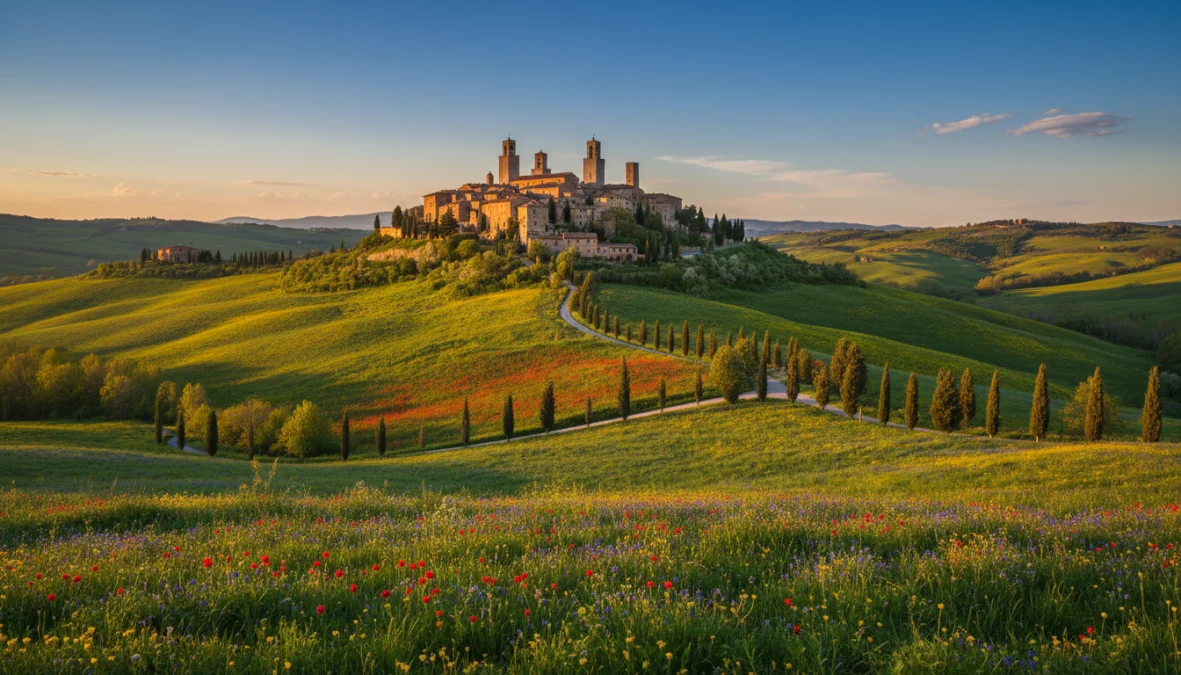
Picture this: rolling green hills dotted with ancient stone villages, wisteria cascading down medieval walls, and outdoor café tables bathed in warm spring sunshine. An italian hill towns weekend in Tuscany and Umbria during spring isn’t just a trip—it’s a sensory awakening. Between the blossoming wildflowers, the absence of summer crowds, and those panoramic views that seem to stretch forever, these regions offer the perfect spring escape for travelers craving authentic Italy.
Whether you’re planning a romantic getaway or simply seeking respite from urban chaos, the italian hilltop villages weekend experience delivers everything from renaissance architecture to world-class wine tasting tours. And the best part? You can explore several of the best towns tuscany umbria without feeling rushed, thanks to the manageable distances and excellent connections between villages.
Why Tuscany and Umbria Hill Towns Are Perfect for a Spring Weekend
Spring transforms these regions into something almost magical. The tuscany hill towns spring season typically runs from April through early June, when temperatures hover in the comfortable 15-22°C range—perfect for wandering cobblestone streets without breaking a sweat. The tuscan countryside explodes with poppies, sunflowers (in late spring), and blooming fruit trees, creating that postcard-perfect landscape you’ve always imagined.
But there’s a practical advantage too: fewer tourists. While summer brings hordes of visitors, a spring weekend italy escape means you’ll actually enjoy those village squares and restaurants without the crowds. You might even snag last-minute agriturismo accommodations without booking months ahead. Plus, spring marks truffle season in Umbria, meaning you can indulge in fresh truffle shavings over pasta—a culinary experience worth the trip alone.
Accessibility makes these regions ideal for weekend travelers. Both Tuscany and Umbria sit within easy reach of Florence, Rome, and even Pisa, making them perfect candidates for a spring weekend getaway tuscany umbria. Most villages are connected by regional trains and buses, though renting a car gives you maximum freedom to explore the hidden gem hill towns central italy at your own pace. If you’re looking for more European spring inspiration, check out these best spring weekend getaways in Europe.
Top Tuscan Hill Towns to Visit on Your Spring Weekend
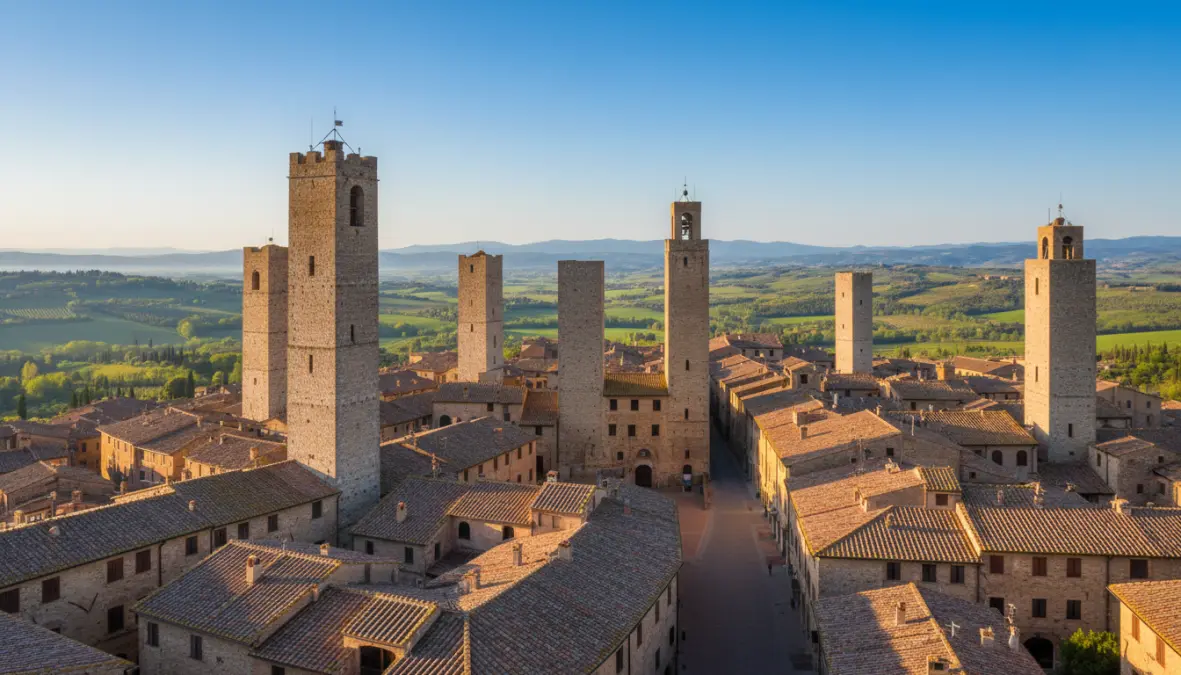
When considering the most beautiful hill towns in tuscany, you’re genuinely spoiled for choice. San Gimignano, nicknamed the “Medieval Manhattan,” rises from the landscape with its fourteen preserved towers that once numbered seventy-two. Walking through its UNESCO-listed historic center feels like stepping into the 1300s, complete with frescoed churches and artisan gelato shops serving some of Italy’s finest. Spring brings fewer tourists, meaning you can actually photograph those famous towers without photobombing strangers.
Montepulciano sits majestically atop a limestone ridge, and it’s heaven for wine lovers. This Renaissance gem produces the renowned Vino Nobile, and spring is ideal for wine tasting tours in the surrounding vineyards. The town’s main square, Piazza Grande, showcases stunning architecture including the Palazzo Comunale, where you can climb the tower for breathtaking valley views. Don’t miss the underground wine cellars carved directly into the volcanic rock beneath the town.
Pienza, the “Ideal City of the Renaissance,” was redesigned in the 15th century as a utopian urban space. Today, it’s compact enough to explore in a few hours, yet packed with charm. It’s also Pecorino cheese territory—every shop seems to offer tastings of this local specialty. Spring markets here overflow with fresh produce and artisan goods, perfect for assembling a picnic to enjoy overlooking the Val d’Orcia’s undulating hills.
Cortona, popularized by “Under the Tuscan Sun,” delivers authentic Tuscan experiences without the commercialization you might expect. Perched above the Chiana Valley, its steep streets reward the climb with incredible panoramic views and a tangible sense of history. The town’s Etruscan walls date back 2,500 years, while its museums house remarkable artworks. Spring brings the town’s gardens to life, and nearby Lake Trasimeno makes an excellent day-trip addition.
For a practical tuscany and umbria weekend itinerary, consider basing yourself in one central location. Montepulciano or Cortona work well as hubs, allowing day trips to nearby villages. Most tuscan hill towns visit destinations sit within 30-60 minutes of each other by car, making it feasible to experience two or three towns per day if you start early. Need help planning your route? This guide on planning multi-city European weekends offers valuable transportation tips.
Umbria’s Medieval Villages: Hidden Gems for Your Italian Hilltop Weekend
While Tuscany gets much of the spotlight, the umbria medieval villages offer equally captivating experiences with a fraction of the tourist traffic. Known as Italy’s “green heart,” Umbria delivers that authentic, unhurried Italian experience many travelers crave. The umbrian hilltop towns feel genuinely lived-in, where locals still outnumber visitors and centuries-old traditions remain part of daily life.
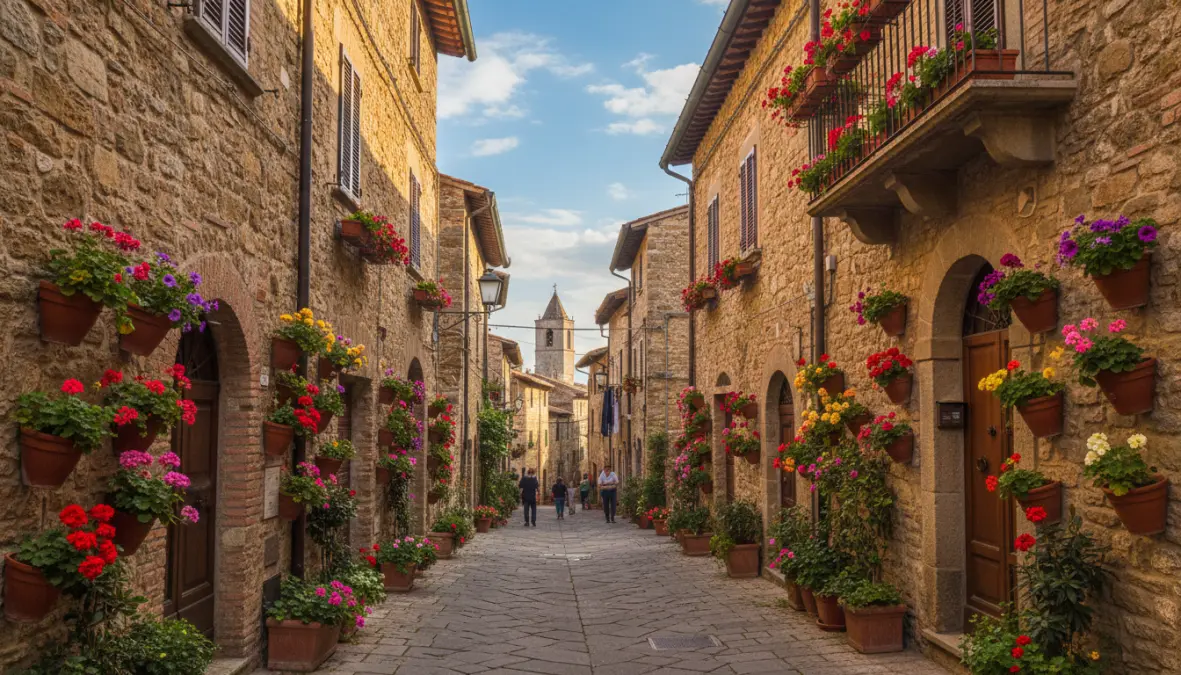
Spello clings to Mount Subasio’s slopes, its honey-colored stone buildings adorned with flower boxes that explode with color each spring. The town’s narrow alleys lead to unexpected piazzas and Roman ruins, while its churches contain remarkable Renaissance frescoes. If you’re lucky enough to visit during the Infiorata festival (typically late May/early June), you’ll witness the streets transformed into elaborate flower-petal artworks—truly one of the best italian hill towns to visit in spring experiences.
Bevagna preserves its Roman street plan and offers a time-capsule glimpse into medieval life. Its central Piazza Silvestri features three Romanesque churches and hosts a monthly antiques market. Unlike more touristy destinations, Bevagna maintains its working-town atmosphere—you’ll find locals chatting in cafés and artisans practicing traditional crafts in small workshops. Spring brings truffle season, and several restaurants here serve exceptional truffle-based dishes at prices far below Tuscan equivalents.
Montefalco, called the “balcony of Umbria,” provides 360-degree views across the Umbrian valley. This wine town produces Sagrantino, one of Italy’s most powerful reds, and numerous enotecas offer tastings. The town’s compact size makes it walkable in an hour, yet its art-filled churches and convivial atmosphere encourage lingering. Spring weather makes the surrounding vineyard walks particularly pleasant.
Todi and Gubbio represent the romantic hilltop villages umbria at their finest. Todi’s perfectly preserved medieval villages center around one of Italy’s most beautiful piazzas, while Gubbio’s dramatic mountain setting and intact medieval quarter create an almost theatrical backdrop. Both towns host spring festivals celebrating local products and traditions.
For where to stay in tuscan hill towns and their Umbrian counterparts, agriturismo accommodations provide authentic experiences at reasonable prices. These farm-stays often include home-cooked meals featuring estate-produced wine and olive oil, turning accommodation into an experience itself. Many agriturismi occupy restored farmhouses with swimming pools and garden terraces—perfect for relaxing after a day of exploration. Solo travelers might also appreciate these European destinations for solo weekend travel tips.
Frequently Asked Questions About Italian Hill Towns Weekends
How many hill towns can you visit in a weekend? Realistically, you can comfortably explore 3-5 hill towns during an italian hill towns weekend, depending on your pace and transportation. If you’re driving, visiting two towns per day works well—one in the morning, another in the afternoon. Using public transport reduces this to 2-3 towns total, as bus connections between smaller villages can be infrequent. Quality beats quantity: spending a few hours truly experiencing each village creates better memories than rushing through a checklist.
Do you need a car to visit Italian hill towns? While trains and buses connect major towns like Montepulciano, Cortona, and Gubbio to regional hubs, a car dramatically increases flexibility for exploring the best towns tuscany umbria. Smaller gems like Pienza or Bevagna have limited public transport. If you’re staying at an agriturismo between towns, a car becomes essential. However, solo travelers or those uncomfortable with narrow Italian roads can base themselves in one well-connected town and take day trips. Check budget airlines for European short breaks to find affordable flights to nearby airports.
What’s the best base for exploring Tuscany and Umbria hill towns? Montepulciano or Cortona work excellently for Tuscany, while Spello or Bevagna serve Umbria well. If you want to explore both regions, consider Cortona—it sits near the Tuscany-Umbria border, providing access to both. Alternatively, spend one night in each region to minimize driving while maximizing exploration time.
When is the best time to visit in spring? The best time visit italian hill towns falls between mid-April and early June. April brings wildflowers and Easter celebrations, May offers perfect weather with temperatures around 20°C, and early June provides warm days before summer crowds arrive. Avoid Easter weekend itself, as Italians take holidays then, creating unexpected crowds. March can work too—find more European cities to visit in March if you’re planning early spring travel.
Are hill towns crowded in spring? Spring represents the sweet spot between winter’s emptiness and summer’s chaos. You’ll encounter other travelers, especially in famous spots like San Gimignano, but nothing like July-August crowds. Weekdays prove quieter than weekends, and arriving early (before 10am) means experiencing towns at their most peaceful, when locals are setting up shops and the morning light bathes those cobblestone streets in golden hues.
An italian hill towns weekend in spring offers something increasingly rare in modern travel: the chance to slow down and savor. Whether you’re drawn to Tuscany’s wine-soaked landscapes or Umbria’s medieval authenticity, these villages reward those who approach them without rushing. Pack comfortable walking shoes, leave room in your suitcase for local wine and olive oil, and prepare for a weekend that might just redefine how you think about Italy. The hill towns aren’t going anywhere—they’ve stood for centuries—but spring’s particular magic only lasts a few precious months. Don’t wait to experience it.