How to Use Rail Passes for European Weekend Trips: Complete Savings and Strategy Guide
You’ve spotted a cheap flight deal, scrolled through Instagram-worthy European cities, and suddenly you’re daydreaming about hopping between Amsterdam, Brussels, and Paris in a single weekend. But then the question hits: should you buy individual train tickets or grab a rail pass? The answer isn’t as straightforward as you’d think, especially when it comes to europe rail pass weekend trips. Let me walk you through exactly when these passes make sense, how much you’ll actually save (or lose), and the strategic moves that’ll transform your weekend getaways from expensive headaches into budget-friendly adventures.
Understanding European Rail Passes for Weekend Travel
First things first: not all rail passes are created equal, and the difference matters for weekend train trips europe. If you’re a European resident, you’ll be looking at Interrail passes. Non-European residents? Eurail is your ticket. They cover the same networks but have different eligibility requirements and pricing structures.
When planning interrail weekend travel or eurail pass weekend trips, you’ll encounter two main pass types: continuous passes (valid for consecutive days like 3, 5, or 7 days) and flexi passes (offering a set number of travel days within a longer period, like 4 days within a month). For weekend trips specifically, flexi passes often make more sense since you’re not traveling every single day.
Here’s the catch: a “travel day” on your pass runs from midnight to midnight, so that Friday evening departure and Sunday return actually consume two precious travel days. Some passes also come in regional flavors (covering just Benelux, Scandinavia, or a single country) versus global options covering 33 countries. For 2-4 day weekend getaways, regional passes or point to point tickets often compete favorably against global passes. The key is understanding your itinerary before committing to any pass.
Cost Comparison and When Rail Passes Actually Save You Money
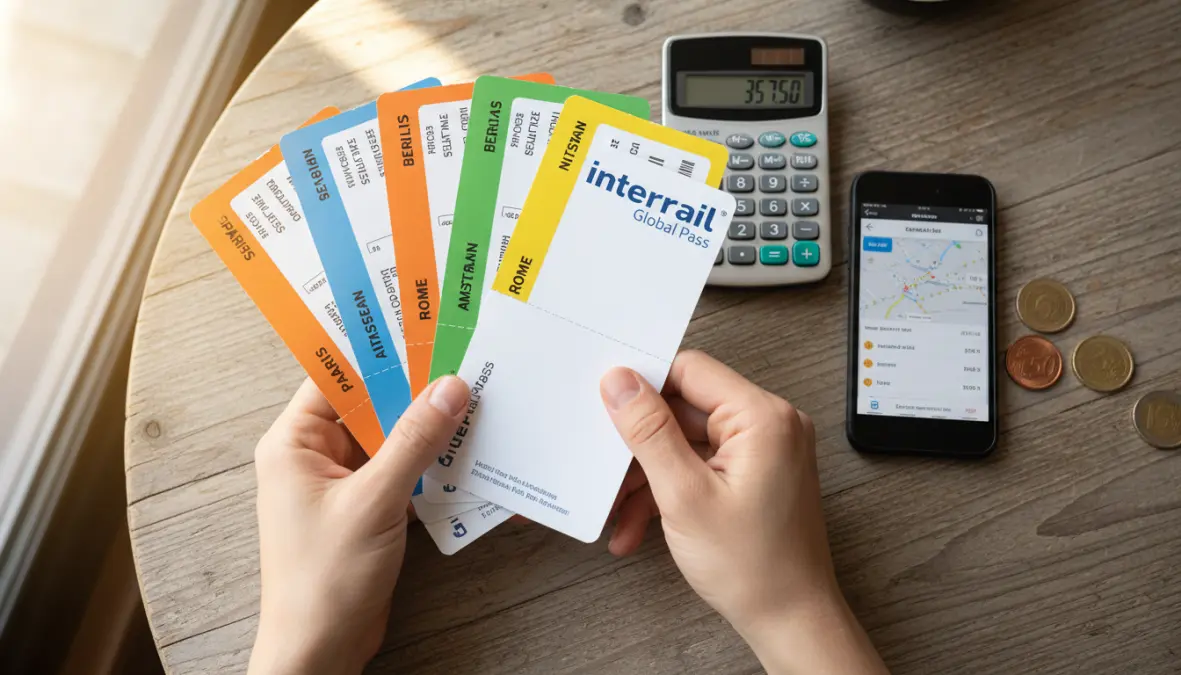
Let’s talk numbers, because this is where the rail pass cost comparison gets interesting. A 4-day Global Flexi Pass (second class) typically costs around €250-300 depending on your age. Sounds reasonable for unlimited travel, right? But when you factor in seat reservations and actual ticket prices, the math changes quickly.
Consider this Amsterdam-Brussels-Paris weekend: Amsterdam to Brussels runs about €29-44 if booked in advance, Brussels to Paris costs €25-59, and Paris back to Amsterdam ranges from €35-79. Total: roughly €90-180 for point to point tickets booked early. That same trip with a rail pass? You’ll still pay €20-35 in mandatory reservation fees for the Thalys and TGV high speed trains, bringing your total cost to €270-335. Not exactly european rail pass savings.
However, flip the script to a Vienna-Prague-Budapest loop. Point-to-point tickets for this route typically run €140-210 total, with fewer mandatory reservations. A regional pass covering these countries might cost €180-220, and since many regional trains don’t require reservations, you’re looking at actual savings plus added flexibility. For those wondering are rail passes worth it for short trips, the answer depends heavily on your specific routes.
Here’s a quick breakdown of when passes tend to save money on weekends: destinations with expensive point-to-point fares (Scandinavia, Switzerland), routes using regional trains instead of high-speed services, trips covering 3+ cities in countries with reasonable reservation fees, and cross border travel where individual tickets get pricey. Passes struggle to compete on single-route weekends, heavily-traveled corridors with cheap advance fares, and French or Spanish routes requiring expensive mandatory reservations.
Hidden Costs and Reservation Fees to Factor In
This is where many travelers get blindsided. That rail pass doesn’t automatically grant you a seat on every train. French TGV trains charge €10-20 for pass holders, Thalys adds €20-30, Italian Frecciarossa trains want €10, and night trains can demand €14-60 depending on accommodation class. These seat reservations aren’t optional suggestions—they’re mandatory, and they eat into your perceived savings fast.
Spain’s particularly brutal with reservation fees often matching the cost of advance-purchase tickets. Meanwhile, Germany, Austria, and much of Eastern Europe rarely require reservations on regional trains, making passes more attractive there. To minimize these costs, prioritize countries and routes with optional reservations, travel on regional services when time permits (yes, it’s slower but genuinely free with your pass), and book night trains strategically since they count as one travel day but cover overnight transport and accommodation. If you’re exploring multi-city European weekends, understanding these reservation requirements can make or break your budget.

Strategic Planning: Maximizing Your Rail Pass for Weekend Getaways
Now for the good stuff—the actual rail pass strategy guide that turns a mediocre deal into genuine value. First rule: choose destinations within 3-5 hours of each other. This isn’t the time for Barcelona to Stockholm. Think Amsterdam-Cologne-Brussels or Florence-Bologna-Venice. Compact routes maximize your weekend getaways train europe experience without burning entire days in transit.
Timing matters enormously when planning weekend trips with eurail pass. Leaving Friday after work sounds appealing, but remember: that evening departure burns an entire travel day on your flexi pass. Sometimes buying a single point-to-point ticket for Friday evening and activating your pass Saturday morning saves a precious travel day. For how to use interrail pass for weekend travel efficiently, consider Saturday morning departures and Sunday evening returns when possible.
Here’s a pro move: mix high speed trains and regional trains strategically. Take the fast train for your longest journey (where time matters most), then use reservation-free regional services for shorter hops. This hybrid approach maximizes both time and money. Apps like Rail Planner (official Eurail/Interrail app), Trainline, and DB Navigator become essential tools here. For comprehensive planning resources, check out these essential travel apps for weekend trips.
Another strategy: combine your rail pass with city cards for additional savings on museums, public transport, and attractions. Many European cities perfect for weekend travel offer 48-72 hour cards that stack beautifully with rail pass savings. And speaking of flexibility, flexi passes shine for spontaneous travelers who might decide to extend a stay or change routes—something impossible with advance-purchase point-to-point tickets.
Recommended Weekend Itineraries by Rail Pass Type
For a 4-day flexi pass covering Benelux: Amsterdam (Friday evening arrival on separate ticket) → Utrecht (Saturday, 30 min) → Rotterdam (Saturday afternoon, 40 min) → Bruges (Sunday, 90 min) → Brussels (Sunday afternoon, 1 hour) → Amsterdam (Monday, 3 hours). Total reservation fees: approximately €0-20. This works economically because point-to-point tickets for this multi-stop journey would exceed €150, while the pass costs around €180-200 with minimal reservations.
For a 3-day continuous pass in Italy: Rome → Florence (Saturday, 1.5 hours, €10 reservation) → Venice (Sunday, 2 hours, €10 reservation) → Bologna (Sunday evening, 1 hour) → Rome (Monday, 2.5 hours, €10 reservation). The €30 in reservations plus a €200 pass beats the €180-250 you’d spend on separate high-speed tickets, especially with last-minute booking.
For a regional Germany pass (weekend): Munich → Nuremberg (Saturday, regional train, 2 hours) → Bamberg (Saturday afternoon, 1 hour) → Würzburg (Sunday, 1.5 hours) → Frankfurt (Sunday afternoon, 2 hours) → Munich (Monday, 3.5 hours). Zero mandatory reservations, pure flexibility, and the pass pays for itself by day two. This exemplifies how to maximize european rail pass savings by focusing on reservation-free routes.
Want more destination inspiration? These spring weekend getaways and romantic European escapes pair beautifully with rail pass strategies. And if you’re also considering flights, this budget airlines comparison helps you decide when trains beat planes.
FAQ
Is a rail pass worth it for a 3-day trip?
It depends entirely on your route. For expensive corridors like Switzerland or Scandinavia with multiple destinations, yes. For single-route trips or heavily-discounted advance fares in Western Europe, probably not. Calculate your specific itinerary with reservation fees included.
Can I use a Eurail pass for just weekend travel?
Absolutely. Flexi passes are designed exactly for this—you can use travel days only when needed within a validity period. A 4-day flexi pass within one month lets you take two separate weekend trips.
Do I need reservations with a rail pass?
Sometimes. High-speed trains (TGV, Thalys, Eurostar, Frecciarossa) and night trains require them. Regional and intercity trains in Germany, Austria, Switzerland, and most Eastern European countries typically don’t. Always check before traveling.
What’s the cheapest rail pass for weekend trips?
Regional passes covering 2-4 countries usually offer the best value for weekends. Benelux, Italy, or Germany passes cost significantly less than global passes while covering popular weekend destinations.
How many travel days do I need for a weekend trip?
Typically 2-3 days. A classic Friday evening to Sunday evening trip uses two travel days. Adding a Monday return makes it three. Remember, each travel day runs midnight to midnight regardless of how many trains you take.
Are night trains included in rail passes?
Yes, night trains are covered, but you’ll pay for the sleeping accommodation (couchette or sleeper cabin) separately, typically €14-60. The clever part: a night train departing after 7pm only consumes one travel day (the arrival day), saving you a precious pass day.
The bottom line? Rail passes for europe rail pass weekend trips aren’t automatically money-savers, but with strategic planning, the right pass type, and smart route selection, they can unlock incredible flexibility and genuine savings. Calculate your specific costs, factor in those sneaky reservation fees, and remember that sometimes the cheapest way to travel europe by train weekends involves mixing passes with point-to-point tickets. Now stop overthinking and start planning that weekend adventure—the tracks are waiting. For last-minute inspiration, these cheap last-minute weekend deals might just seal the deal.