One Day in Marseille: Old Port, Bouillabaisse, and Mediterranean Grit
Marseille doesn’t care if you like it. France’s second-largest city slaps you with salt air, fish market banter, and a Mediterranean swagger that feels worlds away from Parisian polish. If you’re planning one day in Marseille, forget the museum marathon—this port city rewards wanderers who eat well, climb high, and embrace its rough-edged charm. From the fish stalls of the Vieux Port to the golden basilica crowning the hill, here’s how to spend one day in Marseille without missing its soul.
Morning: Exploring the Vieux Port and Le Panier
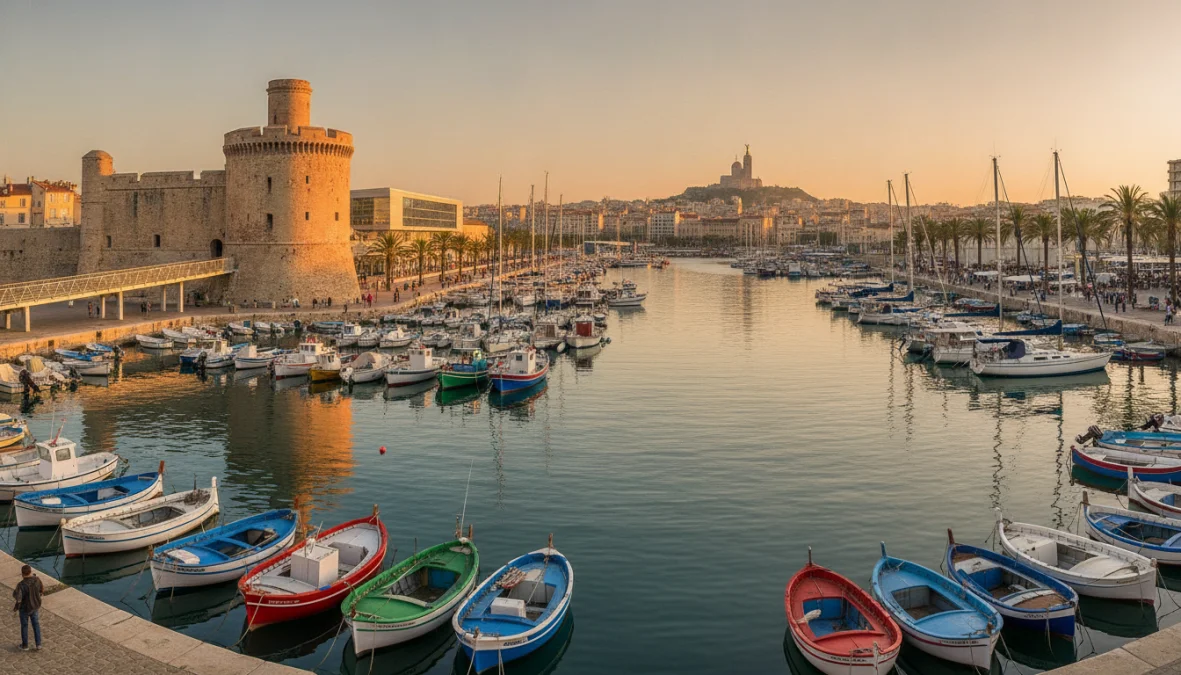
Your marseille itinerary starts where the city’s heart beats loudest: the Marseille Old Port. Arrive early—ideally before 9 AM—when the morning light hits the harbor and fishermen hawk their catch at the legendary fish market (running daily except Monday). The Vieux Port Marseille has been the city’s anchor since Greek colonists arrived 2,600 years ago, and that history soaks into the cobblestones. Grab an espresso at one of the cafés lining Quai des Belges, watch the ferries shuttle toward the Frioul islands, and take in the fortress silhouette of Fort Saint Jean guarding the harbor mouth.
Starting at the Old Port
This isn’t just a pretty marina—the Vieux Port is Marseille’s living room. The fish market is street theater: vendors gut rockfish and monkfish with practiced flicks, locals haggle in thick Provençal accents, and the briny smell mixes with morning bread from nearby boulangeries. If you’re doing a marseille old port walking tour, start here, then stroll toward the Fort Saint-Jean, now connected to the stunning MuCEM museum via a footbridge. Even if you skip the museum, the fort’s ramparts offer killer views back across the harbor. For breakfast, try La Caravelle or Toinou for fresh shellfish and croissants—fuel for the climb ahead.
Wandering Through Le Panier District
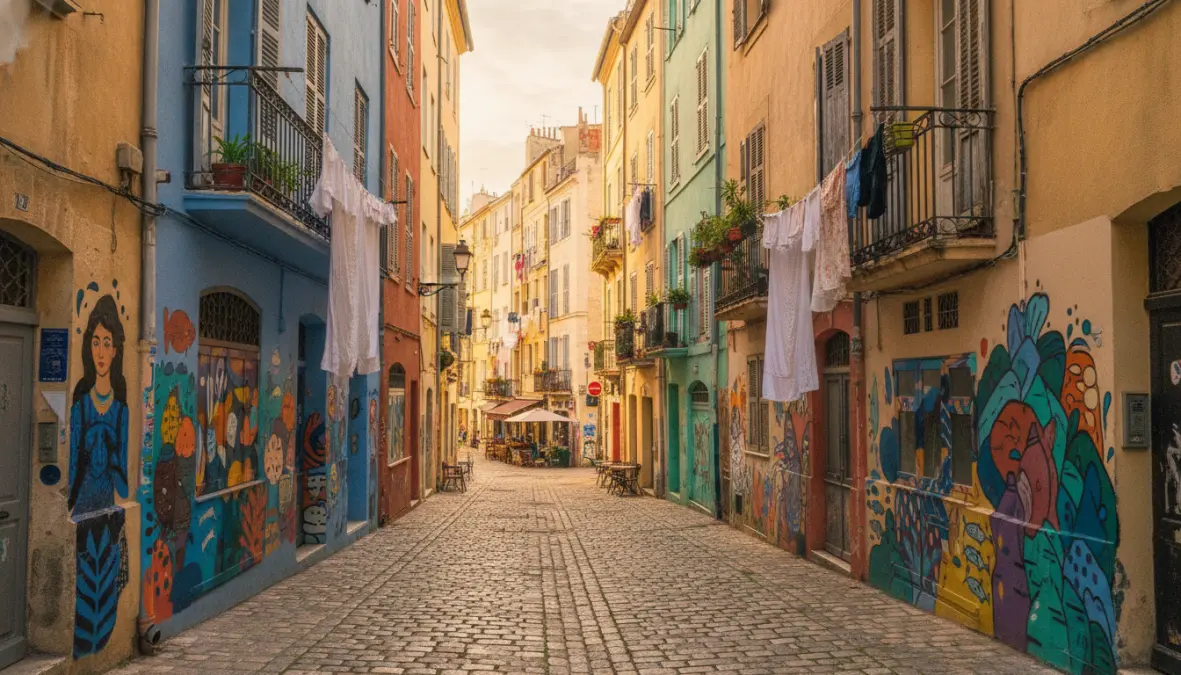
From the Old Port, it’s a ten-minute uphill walk to Le Panier, Marseille’s oldest quarter and its most Instagram-worthy. This tangle of pastel houses, laundry-strung balconies, and street art feels more like a North African medina than a French neighborhood—fitting, given Marseille’s deep ties to Algeria and Tunisia. Wander without a map: discover murals on Rue du Panier, peek into artisan workshops, and rest at Place des Moulins, where locals play pétanque under plane trees. Don’t miss La Vieille Charité, a stunning 17th-century almshouse with a pink stone courtyard that now hosts exhibitions. Things to do Marseille lists always mention Le Panier, but experiencing its lived-in grit—kids kicking soccer balls, grandmothers chatting from windows—is what makes visiting Marseille memorable.
Afternoon: Bouillabaisse Lunch and Coastal Views
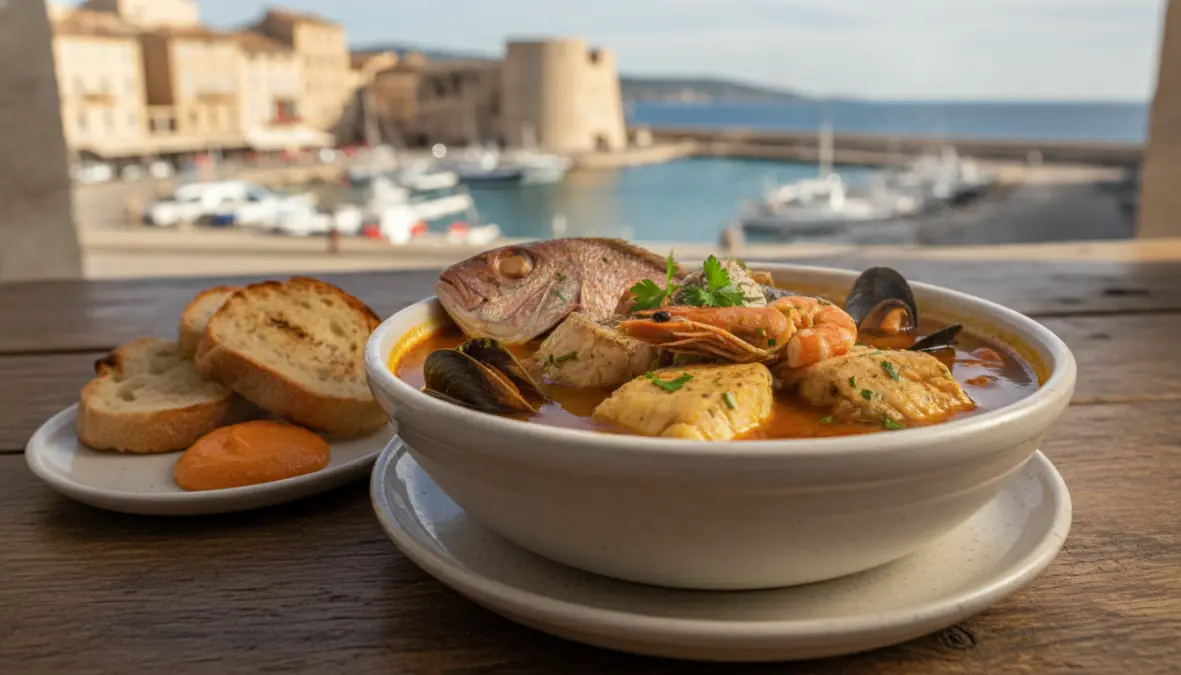
By noon, your stomach should be demanding bouillabaisse Marseille—the city’s signature Provençal fish stew and a ritual you can’t skip on a marseille day trip. This isn’t just soup; it’s a two-course ceremony involving saffron-scented broth, grilled bread with rouille (garlicky mayo), and a platter of local fish like scorpionfish, sea robin, and conger eel. Authentic bouillabaisse takes time and costs €40-70 per person, but it’s the edible essence of the Mediterranean.
Where to Eat Authentic Bouillabaisse
Wondering where to eat bouillabaisse in Marseille? Avoid tourist traps near the Old Port’s main drag. Instead, head to Chez Fonfon on Vallon des Auffes (a tiny fishing harbor east of the center) or Le Miramar on Quai du Port for Charte-certified versions made according to strict traditional recipes. Expect the waiter to serve the broth first, ladling it over bread and rouille, then present the fish separately. It’s rich, aromatic, and deeply satisfying—like the city itself. If bouillabaisse breaks your budget, grab a sandwich from Chez Noël or panisses (chickpea fritters) from a street vendor. For those exploring other Mediterranean day trips, this kind of coastal cuisine defines the region.
Climb to Notre-Dame de la Garde
After lunch, tackle Marseille’s most iconic sight: Notre Dame de la Garde. Perched 150 meters above sea level, this Romano-Byzantine basilica—topped with a golden Virgin Mary statue—is visible from everywhere in the city. The climb is steep (about 30 minutes from the Old Port), so consider the tourist train or bus 60 if you’re short on time. Inside, the basilica dazzles with mosaic interiors and ex-voto offerings from sailors who survived storms. But the real payoff is outside: 360-degree views over Marseille’s red roofs, the Vieux Port, the Frioul islands, and—on clear days—the distant Calanques cliffs. It’s the perfect spot to understand why this gritty, beautiful port city has endured for millennia. Plan about an hour here, and visit late afternoon when the light turns golden.
Evening: Marseille’s Mediterranean Character and Practical Tips
As the sun drops, Marseille softens. Head back to the waterfront for aperitivo—try a pastis at Bar de la Marine (featured in Pagnol films) or wander along Corniche Kennedy, the scenic coastal road linking the Old Port to the beaches. If you have energy left, the MuCEM’s rooftop terrace is magic at sunset, or simply claim a bench at the Vieux Port and watch the city’s parade of joggers, lovers, and fishermen packing up for the day. This is when Marseille’s Mediterranean soul shines brightest—relaxed, unpretentious, and gloriously alive.
Practical tips for your one day marseille itinerary old port adventure: the metro and bus system is efficient (grab a day pass for €5.20), but much of the center is walkable. Is one day enough for Marseille? Honestly, you’ll scratch the surface. Skip the Calanques hiking (that demands a full day), but you’ll taste the city’s essence. Safety-wise, stick to main areas, watch your bags near Gare Saint-Charles, and remember: Marseille’s grit is part of its charm, not a bug. The best months are May-June and September-October, when Mediterranean warmth meets fewer crowds—similar to the timing recommended for European island weekends.
Marseille won’t coddle you with picture-perfect facades or tourist-friendly smiles. It’ll feed you the sea in a bowl, show you sunsets from a hilltop chapel, and leave you smelling like salt and saffron. If you’re asking how to spend one day in Marseille, the answer is simple: eat, climb, wander, and let the Mediterranean do the rest. And if the city gets under your skin—as it tends to—you’ll already be planning a longer return before your train pulls away.